
Pros And Cons Of Concrete Imprint Driveways And Resin Driveways
Picking a new driveway is a bigger decision than it seems at first. It’s not just about kerb appeal — you’re also weighing up cost, how much upkeep you’re signing up for and whether it’ll cope with UK weather, which never really behaves. Two options keep coming up: concrete imprint and resin driveways. Both look great, but they’re not exactly built for the same kind of home. One might suit your place down to the ground, while the other’s more of a mismatch.
So let’s break both down properly, so you can figure out what actually works for you.
Concrete Imprint Driveways: What You Need to Know
How Concrete Imprint Driveways Are Made
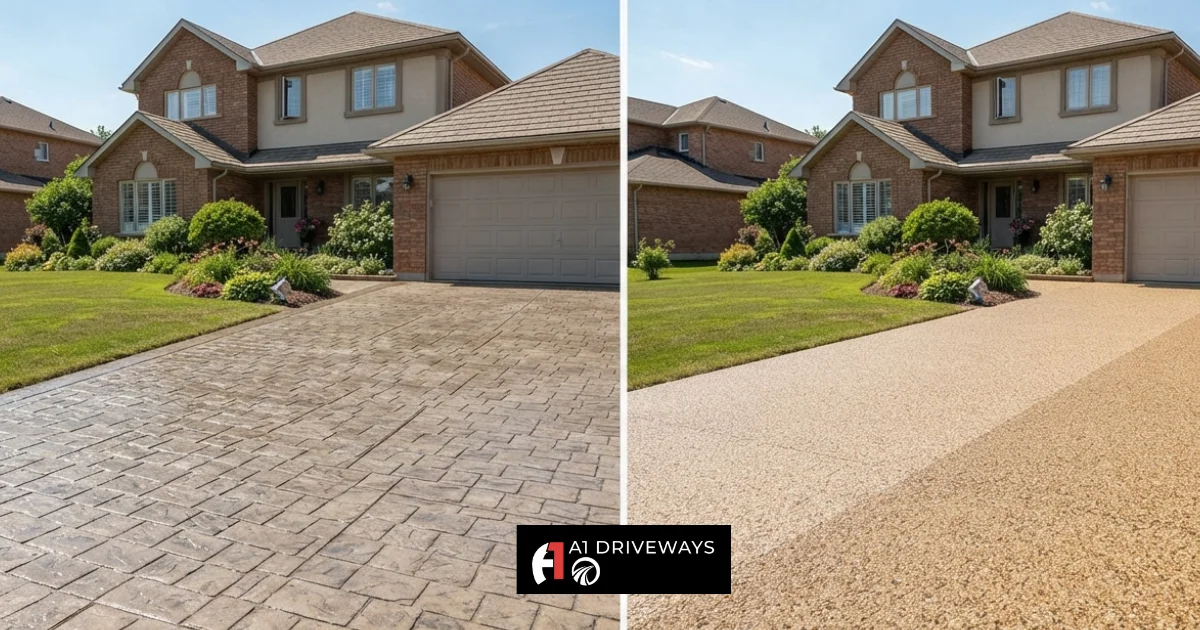
Concrete imprint driveways start life as wet concrete poured over a prepared base. While it’s still soft, a textured mould gets pressed into it to create a pattern — cobblestone, brick, slate, whatever look you’re after. Once it hardens, it’s sealed to lock in the colour and protect the surface. What you end up with is one solid slab that looks like individual paving without actually being made of separate pieces.
Pros of Choosing Concrete Imprint
The biggest draw here is strength. Because it’s laid as one continuous slab, there’s nothing to shift, sink, or come loose the way individual block paving sometimes does over the years. You also get a lot of freedom with design — patterns and colours that mimic natural stone or brick, at a fraction of what real stone would cost. Installation tends to move along fairly quickly too and once it’s sealed, keeping it clean is as simple as a sweep or a hose down.
Cons of Choosing Concrete Imprint
It’s not flawless, though. If the surface does crack — usually from the ground shifting underneath or something heavy parking on it repeatedly — fixing it neatly can be a challenge, since you can’t just lift and swap one section like you would with block paving. The seal also wears down over time, so it needs redoing every few years to keep things looking sharp and watertight. And since it’s one solid surface, water tends to sit on top rather than soak through — which brings us nicely to the next point.
Environmental Impact and Sustainability
Concrete imprint is non-permeable. Rainwater runs off it instead of draining into the ground below, so depending on where you live, your council might ask for a proper drainage plan or even planning permission before you go ahead. It’s not a reason to rule it out, but it’s something to sort out early rather than after the concrete’s already down.
Still unsure? Read our guide on Is Pattern Imprinted Concrete Worth It?
Resin Driveways: What You Need to Know
How Resin Driveways Are Made
Resin driveways are made by mixing small stone aggregates with a clear resin binder, then spreading the mix over a solid base, usually tarmac or concrete. It gets trowelled smooth and even and once it sets, the stones are locked together — so you get that gravel-like look without any loose stones getting kicked around or stuck in your shoes.
Pros of Choosing Resin
Resin has picked up a lot of fans lately and it’s not hard to see why. It gives a clean, smooth, modern finish, with plenty of colour and stone combinations to choose from. It’s also permeable, so rain drains straight through instead of pooling on the surface — a genuine plus during a typical soggy British month. Weeds struggle to take hold too, so there’s less pulling grass out of gaps on a Sunday afternoon. Day to day, it barely needs any looking after.
Cons of Choosing Resin
That said, resin really lives or dies by how well it’s installed. The base underneath has to be prepared properly, or any weak spots and unevenness will show through eventually. A rushed job can easily lead to patchy colour or areas coming loose down the line. It also tends to cost more upfront than concrete imprint and cheaper resin systems can soften a little in unusually hot weather.
For a fuller rundown of what to weigh up, take a look at the Benefits And Drawbacks Of Resin Driveways.
Drainage and Environmental Benefits
This is really where resin pulls ahead. Since water passes straight through instead of pooling on top, there’s no runoff building up or draining off into the street. Plenty of homeowners find this means they can skip separate planning permission too, as permeable surfaces like resin often meet sustainable drainage standards on their own. For anywhere that struggles with surface water, that’s a genuinely useful advantage.
Concrete Imprint vs Resin: Side-by-Side Comparison
Maintenance and Longevity
Concrete imprint needs the occasional reseal but is otherwise built to last, often going 25 years or more with basic care. Resin asks for very little upkeep once it’s properly laid, though how long it lasts really comes down to the quality of the base and the installation — usually somewhere between 15 and 20 years.
Cost: Upfront and Long-Term
Concrete imprint is generally the more affordable option to start with. Resin costs more initially, but the lower maintenance over the years can help even things out in the long run.
Installation Time and Disruption
Concrete imprint usually takes a few days to lay, plus time to cure properly before you can use it. Resin can sometimes be finished within a day if the base is already solid, though building that base from scratch takes longer.
Appearance, Texture and Design Choices
Concrete imprint leans toward a traditional look, mimicking brick or natural stone. Resin gives a smoother, more contemporary finish that tends to suit newer-build or minimalist homes.
Durability in Different Weather Conditions
Both cope reasonably well with UK weather when they’re installed properly. Concrete imprint can be prone to cracking in freeze-thaw cycles if the sealant isn’t kept up. Resin drains well, which helps cut down on ice forming from standing water, but lower-quality resin can soften slightly during a hot spell.
Which Driveway Suits Your Property Best?
At the end of the day, there isn’t a right or wrong answer here — it’s about what matters most to you. If you’re after something sturdy, kind to your wallet and simple from the off, concrete imprint tends to be the safer route. If drainage, a sleeker finish and less maintenance down the line are bigger priorities, resin’s worth the extra cost. Plenty of people just go with whatever suits their home’s style best and that works too.
Get a Free Quote From A1 Driveways
Still can’t decide between concrete imprint and resin? No need to figure it out alone. A1 Driveways can pop round, take a look at your property and chat through your budget and style to help you land on the right fit for your home. Get in touch today for a free, no-obligation quote — and take the first step toward a driveway you’ll actually be happy with for years.
Frequently Asked Questions
Is resin or concrete imprint better for drainage?
Resin comes out ahead here, since it’s naturally permeable and lets water drain straight through. Concrete imprint is one solid surface, so it’s non-permeable and usually needs a separate drainage solution sorted alongside it.
Which driveway lasts longer, resin or concrete imprint?
Concrete imprint generally wins on lifespan, often lasting 25 years or more while resin tends to last 15 to 20 years, depending on how well it was installed.
Is resin more expensive than concrete imprint?
Generally yes, resin costs more upfront, though it can balance out over time thanks to lower maintenance needs.
Table of Contents
Recent Post
Tarmac Driveway Cost | Price Per m² & Installation Costs
Best Block Paving Driveway Ideas
Pros And Cons Of Concrete Imprint Driveways And Resin Driveways
Can I Lay A Resin Driveway Myself?
Driveway Edging Ideas to Improve Kerb Appeal