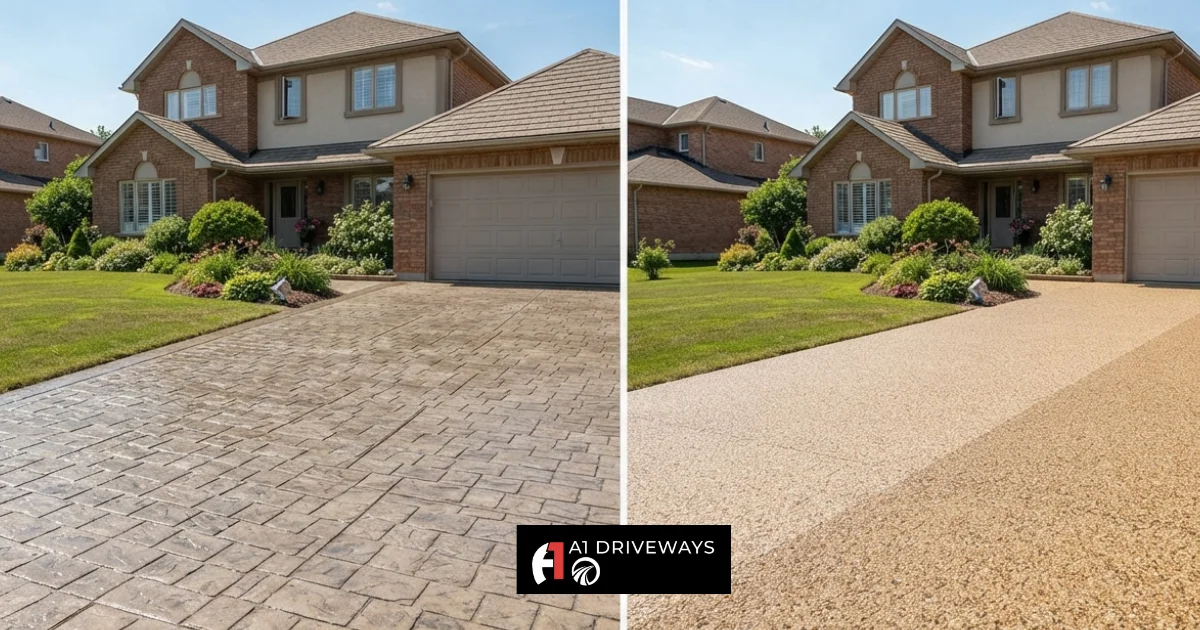
Driveway Edging Ideas to Improve Kerb Appeal
A good driveway is about more than just the surface you park on. The edging is what gives it that tidy finish and helps it stay in shape over time.
Without proper edging, even a well-built driveway can start to look tired. Gravel can spill out, blocks can shift a bit and the whole thing loses that clean, sharp look. That’s why getting the right edging in place early really matters, both for how it looks and how it holds up.
Why Is Driveway Edging Important?
If you have ever seen a driveway where the edges have started to break away or spread into the garden, you will know exactly why edging matters.
At its core, edging acts as a restraint. It holds everything in place, whether that’s block paving, gravel, resin or tarmac. Without that support, the surface can start to move, especially with regular use and the typical British weather we get throughout the year.
It also creates a clear boundary. Instead of your driveway blending into the lawn or path, you get a defined, tidy edge that makes everything look intentional and well finished.
And then there’s the visual side. A driveway with proper edging simply looks better. Cleaner lines, sharper finish and a more “complete” appearance from the kerb.
Best Driveway Edging Ideas for UK Homes
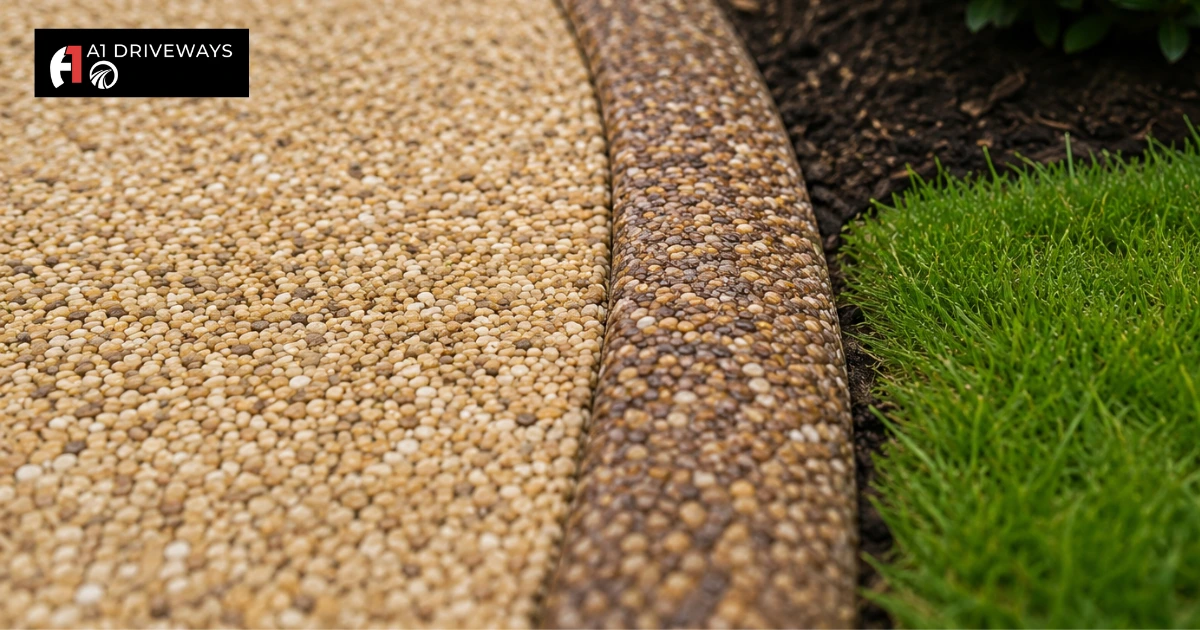
Resin Bound Edging
The popularity of resin bound edging in many UK houses nowadays depends on its aesthetics; resin bound edging provides a neat-looking appearance.
This type of edging performs perfectly when combined with a resin bound driveway; hence, it will give you an aesthetically pleasing look without any visible seams. Another benefit of resin bound edging is its permeability. Since there is plenty of rainfall in the UK, it should help your garden remain dry.
Tarmac Driveway Edging
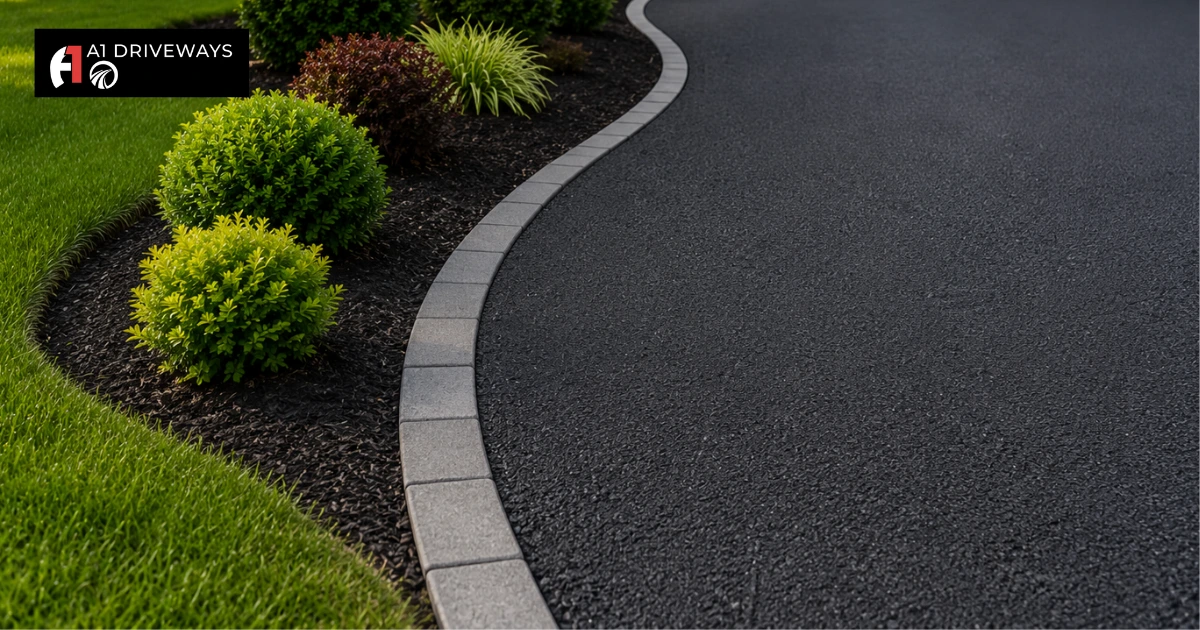
Tarmac is practical and widely used, but on its own, it can look a bit plain and the edges can wear down over time.
This is where edging helps out. Adding concrete or stone edgings on the edges makes your driveway strong enough to avoid breakage of its sides – a very frequent problem with old-fashioned tarmac driveways.
It will also add style to your driveway, because it will have an obvious shape and won’t look like an extension of other areas around it.
In this case, it is very important to ensure proper drainage or else you will run into trouble due to the wrong levels of the driveway.
Flagstone Edging
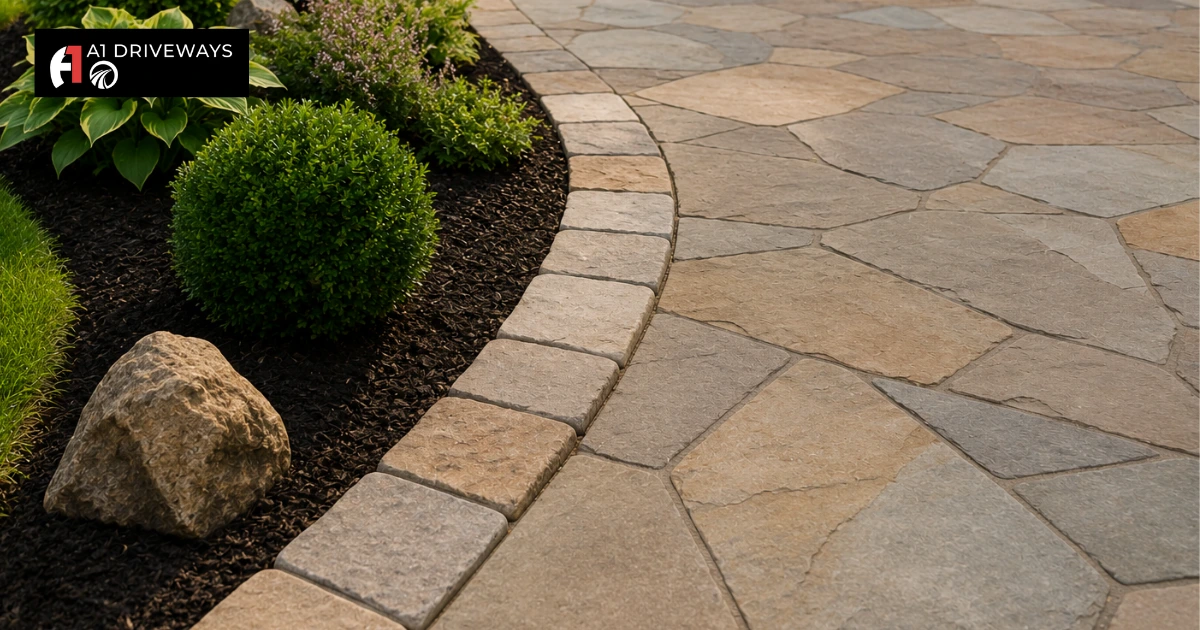
Using flagstone edging is perfect for you if what you want is something with a natural appearance instead of anything too uniform.
They will work very well with period-style buildings, cottages or even homes that already come with gardens, since the natural appearance will blend with them rather than a geometric one.
Flagstone driveways may also be challenging to work with since they aren’t perfectly cut, thus requiring them to be laid out carefully or they can start wobbling.
Gravel Driveway Edging
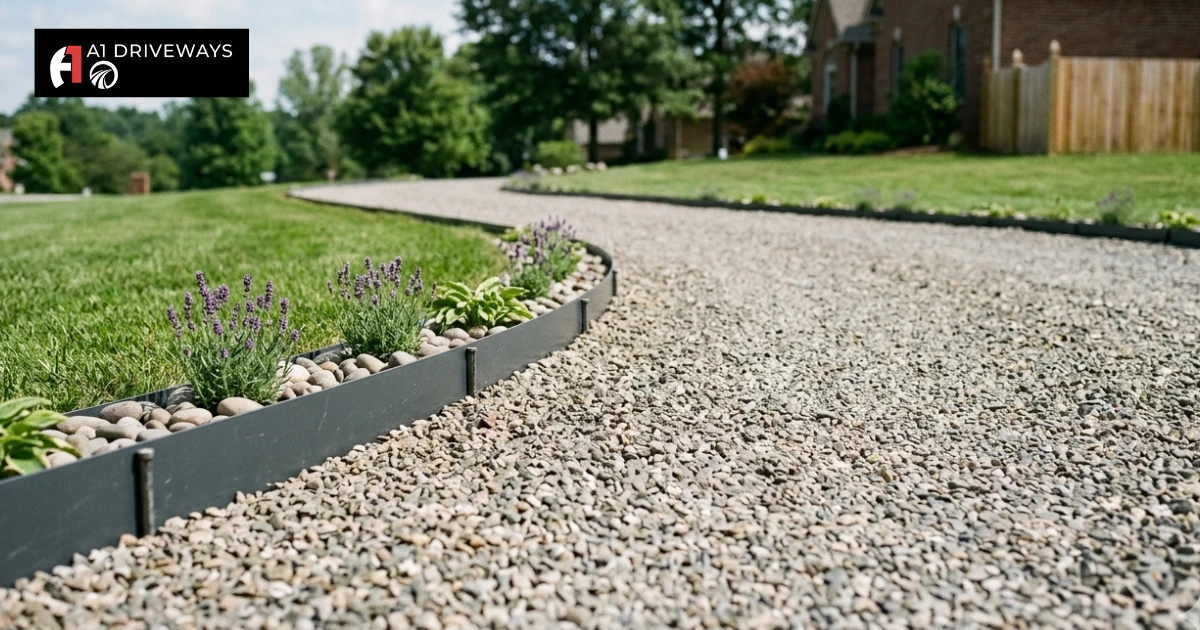
Gravel is one of the most affordable driveway options, but without proper edging, it can quickly become hard to manage.
You will often see gravel spreading into lawns, paths and even onto the pavement especially after heavy rain or regular use.
That’s why strong edging is essential here. Timber sleepers, stone kerbs or metal strips are all commonly used to keep everything contained.
The main thing is stability. The edging needs to be firmly fixed in place, otherwise it won’t do its job, particularly on sloped gravel driveways.
Block Paving Border
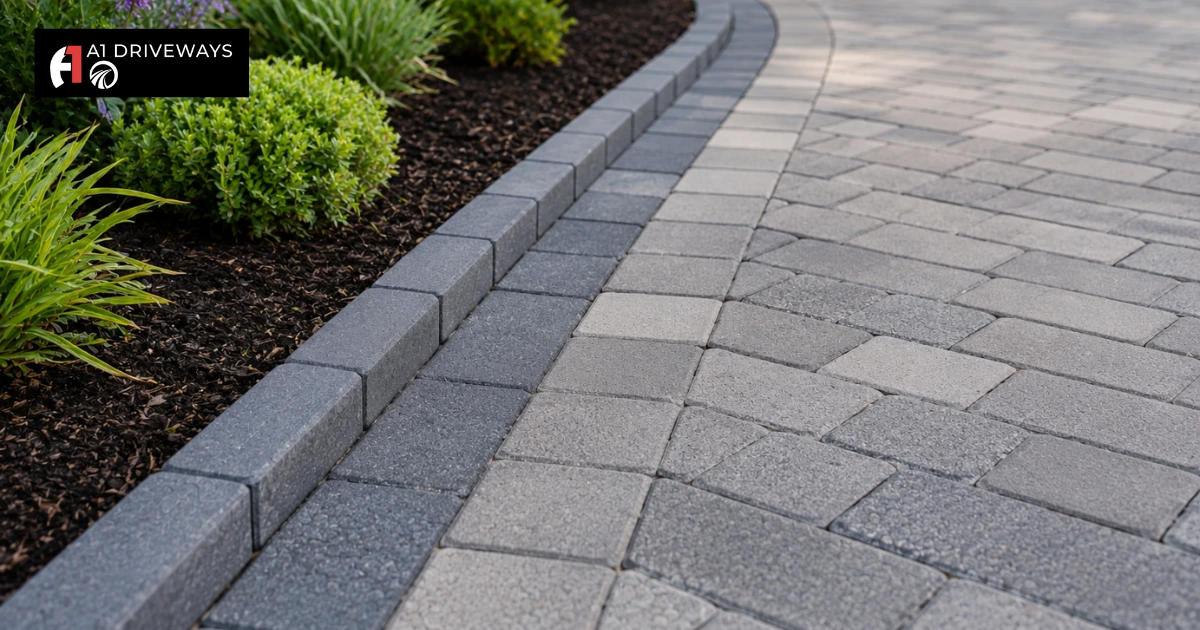
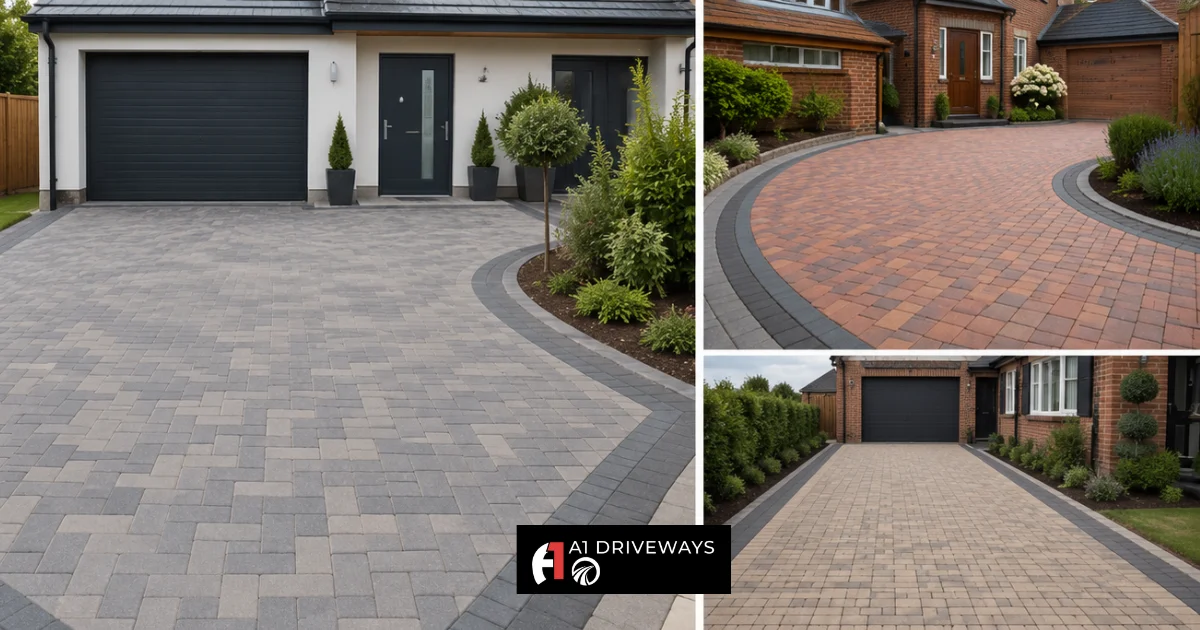
Block paving borders are probably the most recognisable edging style across UK driveways. Block paving driveways often use this type of edging to create a clean, structured finish that enhances the overall design.
They allow you to frame the driveway with a contrasting colour or pattern, which adds a bit of character while still keeping things neat and structured.
More importantly, they act as a locking system. When installed correctly with concrete haunching behind them, they hold the entire driveway in place and prevent the blocks from shifting.
It’s one of the best combinations of function and appearance, which is why it’s so widely used.
Pattern Imprint Concrete Edging
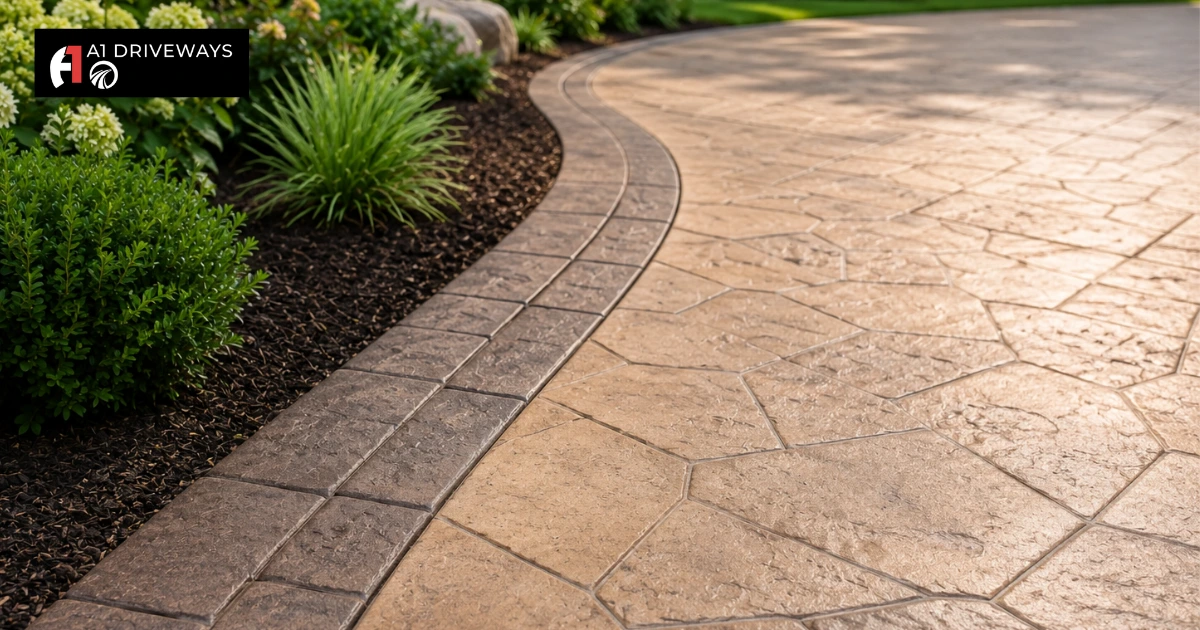
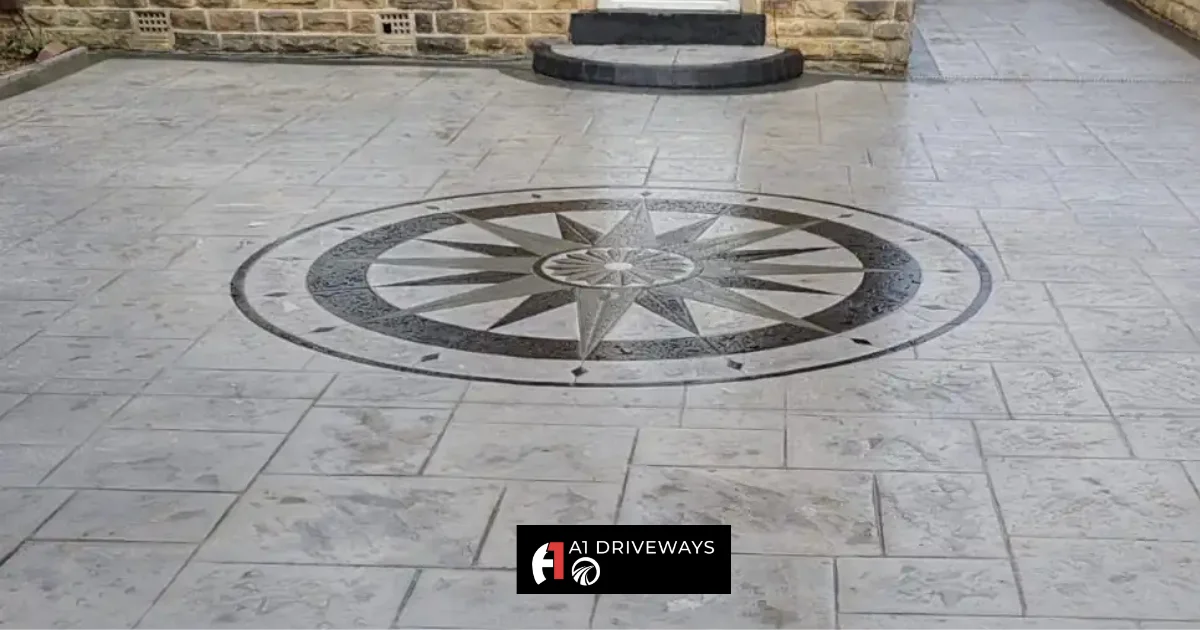
Pattern imprint concrete edging gives you a decorative finish without needing separate materials. Imprinted concrete driveways are especially popular because they offer the same stamped effect across the entire surface, creating a seamless and stylish look.
It can be stamped to resemble brick, stone or other textures, allowing you to either match the driveway or create a subtle contrast around the edges.
It’s strong, long-lasting and fairly low maintenance once installed.
The downside is that it’s not easy to change. If you decide later that you want a different look, it usually involves more extensive work than other edging types.
Brick Driveway Edging
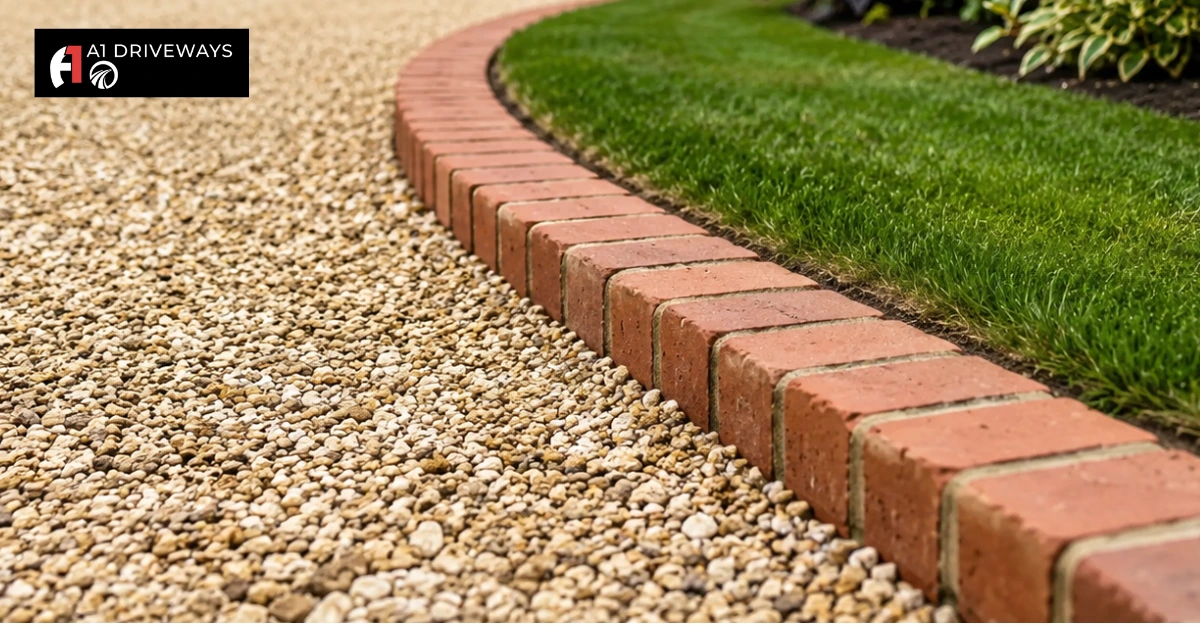
This type of material has been around for many years, and continues to be a good choice.
It goes well with all types of properties and blends well with the bricks that already exist on the exterior of your home.
It is also quite durable, but only when installed properly. The bricks must be set into a strong mortar bed to keep them from shifting during periods of freezing weather.
If done properly, it is an easy solution that never goes out of style.
Natural Stone Borders
Natural stone edging is used quite frequently when it comes to more expensive driveways since aesthetics become as essential as durability.
This kind of material provides a high-quality finishing touch that is substantial enough. Every block of stone is unique to each other, thus making the driveway visually distinctive.
Yet this solution is rather costly as far as materials and labour are concerned. In addition, natural stone edges should be properly fitted and leveled.
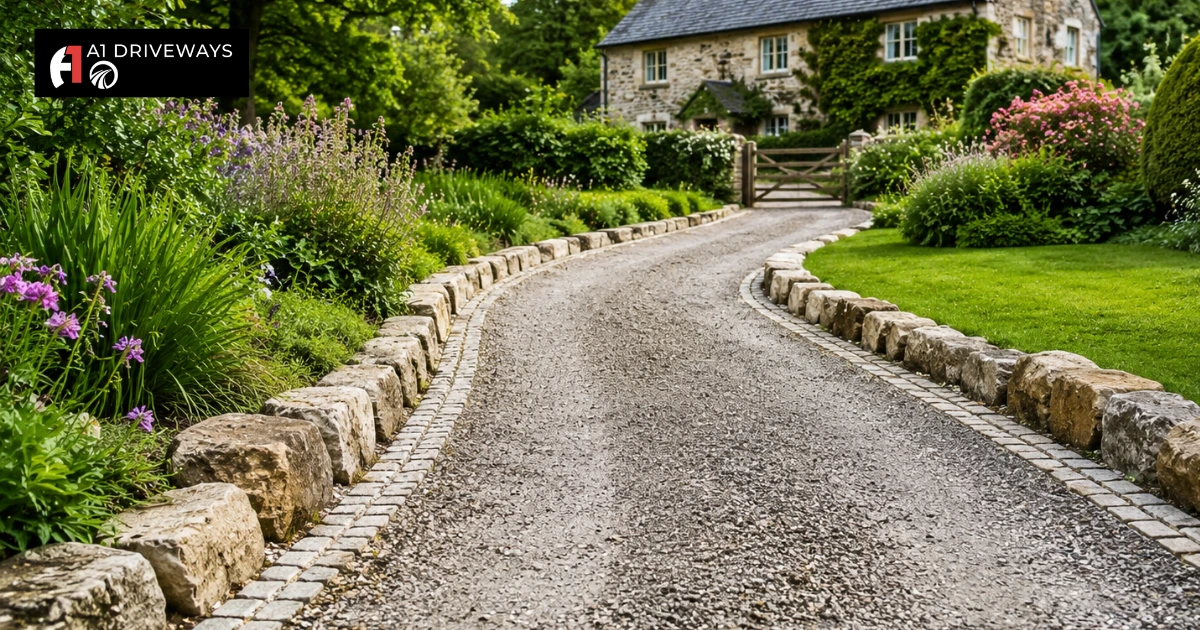
Decorative Driveway Edging
Edging is something you may want to think about doing a little differently.
Some examples might be a paved border, colored contrast or patterned edges that will add some character to the driveway.
It’s something to consider if you want to make sure your driveway has a bit of its own character rather than blending right in.
At the same time, too much difference could result in an unappealing mess.
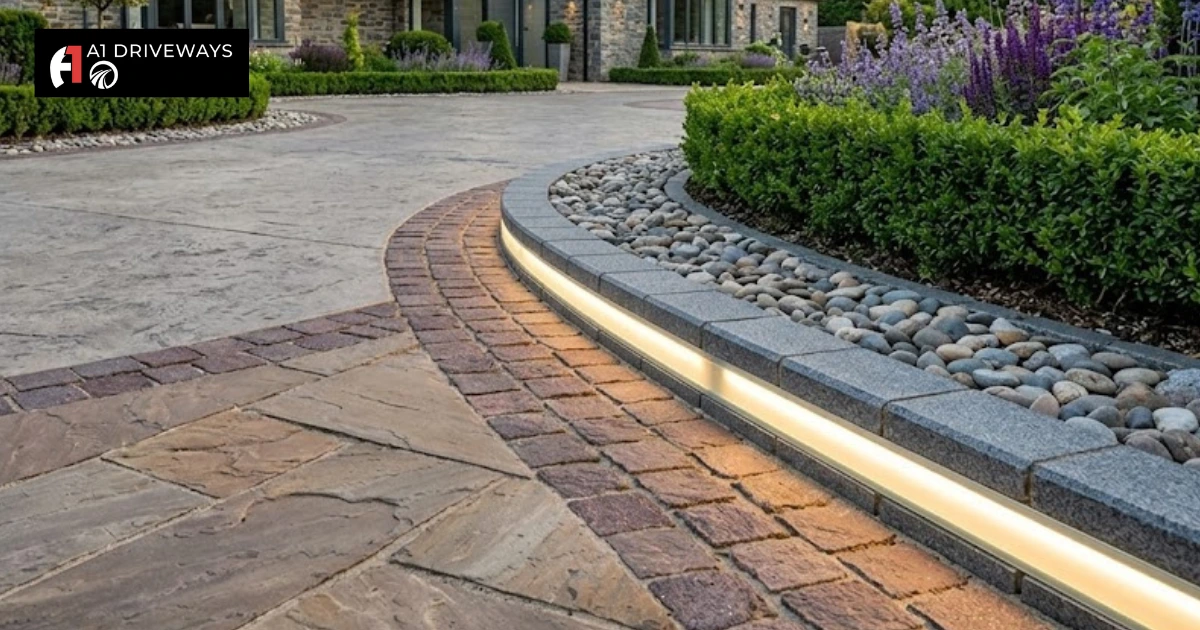
Metal Driveway Edging
Metal trimmers have started gaining popularity, particularly with contemporary buildings.
They provide a neat edge effect and look great with resin-bound and gravel drives.
They are also rather subtle in appearance, making them suitable for people who like a sleek aesthetic.
The most crucial thing is the installation process. It should be fixed firmly in place, otherwise, it might move about.
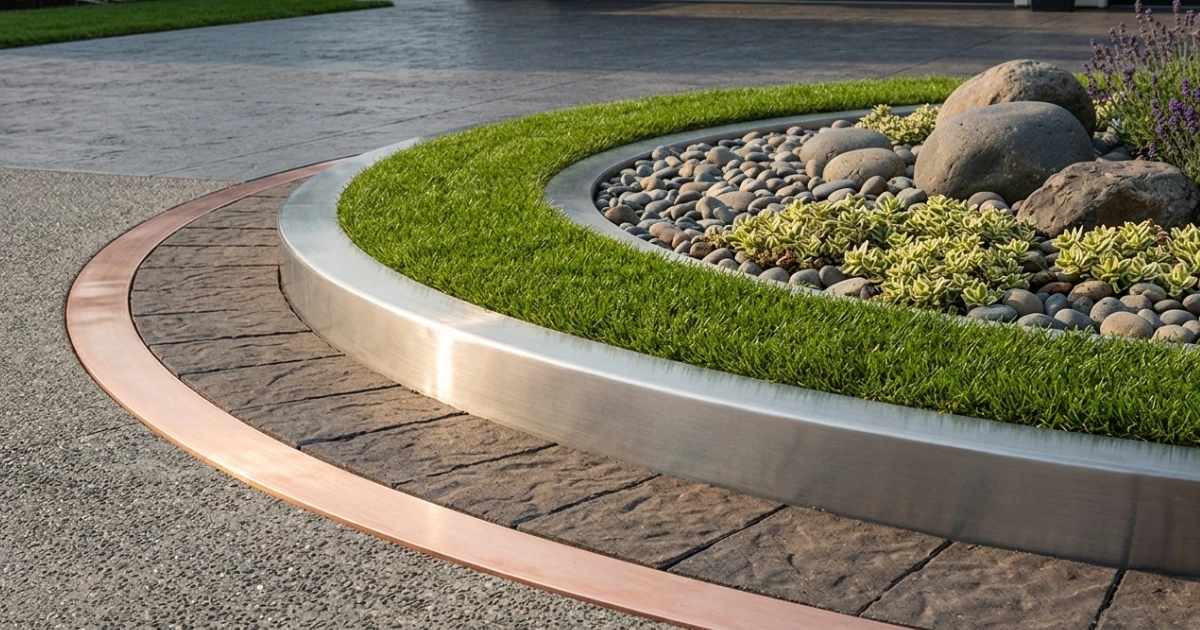
How to Choose the Right Driveway Edging Material
Choose edging that suits both your driveway and your home’s style.
Gravel needs firm containment.
Block paving needs a strong border to hold everything in place.
Resin needs a clean, stable edge.
For a modern property, metal or resin usually works well. For older homes, brick or natural stone often looks better. Budget matters too, but it’s worth choosing something that lasts.
If you are unsure, A1 Driveways can recommend the right option for your space.
Common Driveway Edging Mistakes to Avoid
A lot of driveway issues do not start in the middle, they start at the edges.
One common mistake is using edging that is not strong enough to hold the surface in place. Another is poor preparation underneath, which leads to movement over time.
Drainage is another factor that often gets overlooked. Without proper planning, water can sit along the edges and cause damage.
And then there’s rushed installation. Uneven lines, loose materials or shallow fixing can all lead to problems much sooner than expected.
The most common mistakes are:
Using weak edging that cannot hold the surface properly.
Skipping proper groundwork or sub base preparation.
Ignoring drainage and water run-off.
Rushing the installation.
Choosing a style that does not suit the driveway material.
Benefits of Installing Driveway Edging
Improves Kerb Appeal
A neatly edged driveway immediately looks more finished and well maintained. Its one of the first things people notice when they approach your home.
Prevents Surface Movement
Edging keeps materials where they should be, stopping movement, spreading or sinking over time.
Creates Clear Boundaries
It separates your driveway from surrounding areas, giving everything a more organised and intentional layout.
Enhances Durability
By protecting the edges from wear and damage, edging helps extend the overall lifespan of the driveway.
Why Choose A1 Driveways for Driveway Edging Solutions?
A1 Driveways concentrates on perfection in all the little things, rather than the big things.
They have knowledge about how various types of material react in Britain and use durable edging, rather than just aesthetically appealing edging.
You will be provided with neatness and precision in addition to knowing that your driveway foundation is constructed correctly.
The kind of work you will get from them is long-lasting.
Conclusion
The installation of driveway edging may be thought to be a minor process in the total construction project, but its importance is very high when it comes to the aesthetics and performance of the driveway.
In the event of a mistake in installation, issues are likely to arise much earlier than expected.
It’s, therefore, a worthwhile investment with good payback when carried out effectively.
Frequently Asked Questions
What is the best edging for a block paving driveway?
In most cases, you are looking at a block border that’s been set on concrete. That’s what keeps everything from moving about. Without that support, the blocks can start to spread slightly over time, especially where cars are turning.
Does driveway edging increase property value?
It can do, yeah. It’s one of those things people do not always think about directly, but when a driveway looks neat and properly finished, it definitely gives a better first impression.
How long does driveway edging last?
If it’s been put in properly, you should not have to worry about it for a good couple of decades. Most decent edging will last 15–25 years without much trouble.
What is the best material for durable driveway edging?
You can’t really go wrong with stone, brick or concrete. They are all solid, they handle the weather well and they stand up to the weight of vehicles without any issues.
Can I install driveway edging myself?
You can give it a go with simpler things like bricks if you are fairly handy. But anything that needs to properly hold the driveway in place is usually better done by someone who does it day in, day out — it just saves problems later on.
Table of Contents
Recent Post
Which Material Is Best for Driveway Resurfacing?
How Much Does an Imprinted Concrete Driveway Cost?
Tarmac Driveway Cost | Price Per m² & Installation Costs
Best Block Paving Driveway Ideas