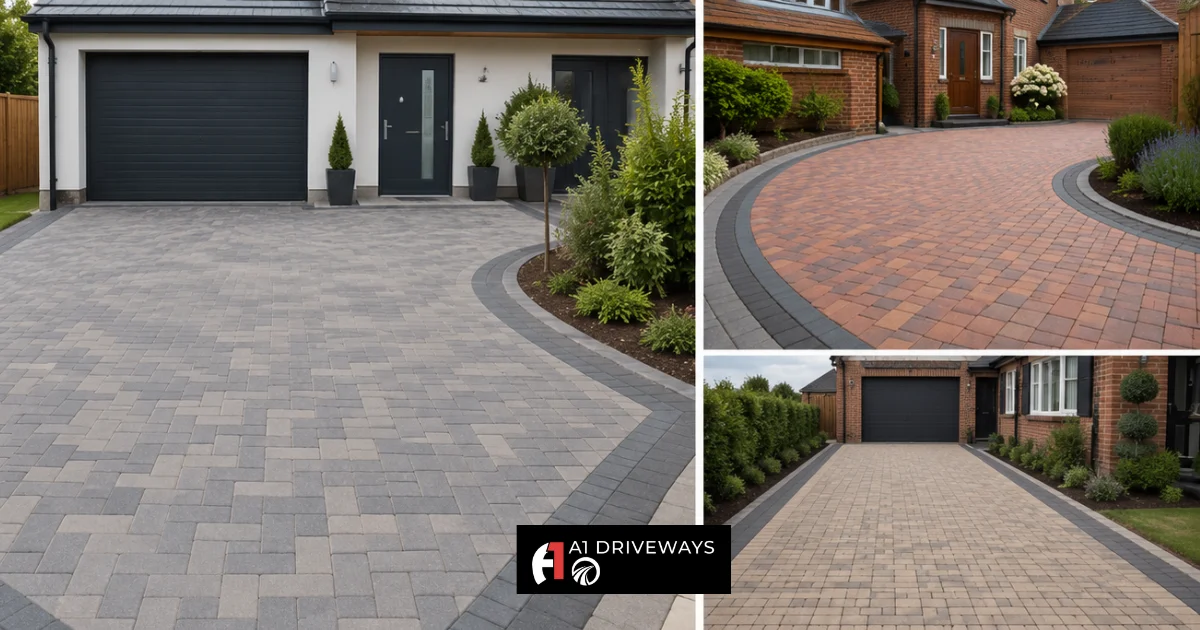
You’ve probably spotted a neighbour’s driveway that looks suspiciously like expensive natural stone or cobblestones, only to find out it’s pattern-imprinted concrete. It’s one of the most searched driveway types in the UK, and for good reason: the visual results can be genuinely stunning.
But is it worth it? That depends entirely on your expectations, your budget, and who lays it. This guide cuts through the marketing noise and gives you the full picture, the good, the bad, and the bit installers don’t always mention upfront. We’ve also included real case studies from homes we’ve worked on across Leeds, Bradford, and West Yorkshire, so you can see exactly what to expect from start to finish.
What Is Pattern-Imprinted Concrete?
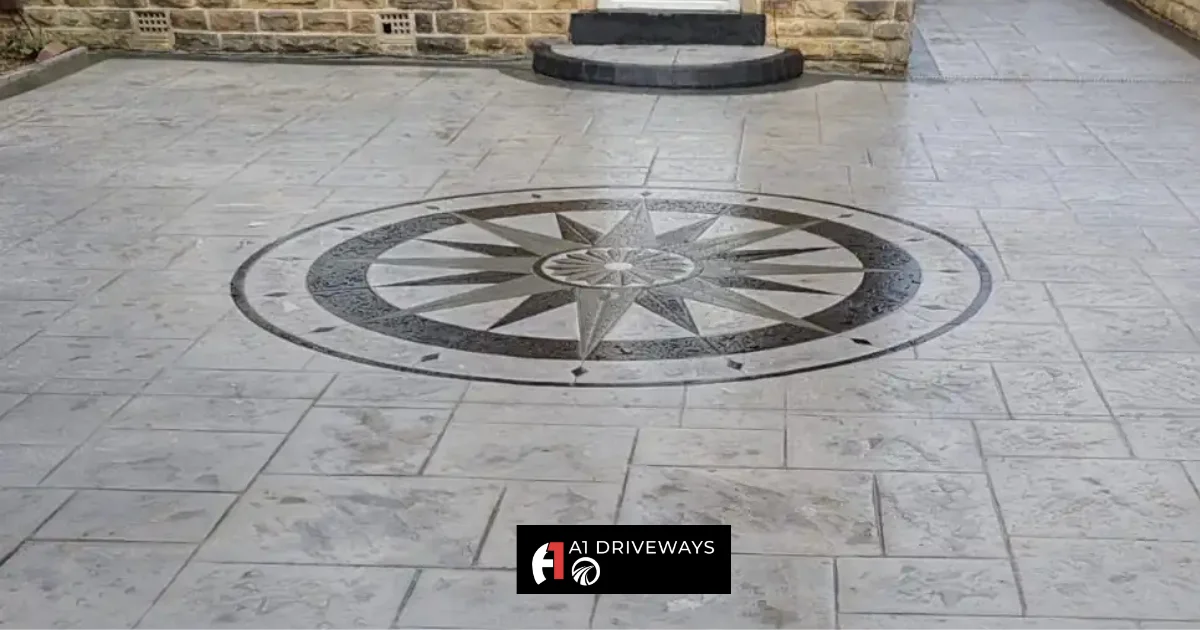
Pattern-imprinted concrete (also known as stamped or decorative concrete) involves pressing textured mats into freshly poured concrete to mimic materials like cobblestone, slate, brick, or wood.
The process uses colour hardeners and a protective sealer to create a durable, seamless surface. This eliminates the joint gaps found in block paving while offering a more premium look than standard concrete. It is a highly popular choice across Northern England, particularly in Leeds, Bradford, Sheffield, and Harrogate, for homeowners seeking a high-end finish at a more affordable price point than natural stone.
How Is Pattern-Imprinted Concrete Made and Installed?
Understanding the installation process matters because it directly explains both the advantages and the limitations of this surface. Here’s what a professional installation actually involves:
- Excavation and Sub-base Preparation: The existing surface is excavated to the required depth (typically 200–250mm). A compacted MOT Type 1 sub-base is laid, which is the single most critical step for longevity. Skimping here is the most common reason imprinted concrete fails prematurely.
- Formwork and Reinforcement: Timber or steel shuttering frames the pour. Steel mesh reinforcement is laid to provide the concrete with tensile strength and reduce the risk of cracking across the UK’s freeze-thaw cycles.
- Concrete Pouring and Levelling: A ready-mix concrete (typically C30 or stronger) is poured, spread evenly, and screeded flat. Expansion joints are cut into the design at regular intervals; these are critical for managing thermal movement and preventing uncontrolled cracking.
- Colour Hardener Application: Powdered colour hardener is broadcast over the wet concrete surface in two passes and worked in, providing both the desired colour and added surface strength.
- Release Agent and Stamping: A powdered or liquid release agent (the contrasting accent colour) is applied before the stamp mats are pressed into the surface by hand or with a tamper, creating the pattern impression.
- Curing and Sealing: After 24–48 hours, the surface is washed down, any blemishes tidied, and a UV-resistant acrylic sealer is applied. Most professional installers will add a non-slip aggregate to the sealer; always ask for this in a UK climate.
Expert Tip from A1 Driveways: The difference between an imprinted concrete driveway that lasts 10 years and one that lasts 30 comes down almost entirely to sub-base depth and the quality of the concrete mix. Always ask your installer for the depth of their sub-base preparation and the concrete strength rating they use.
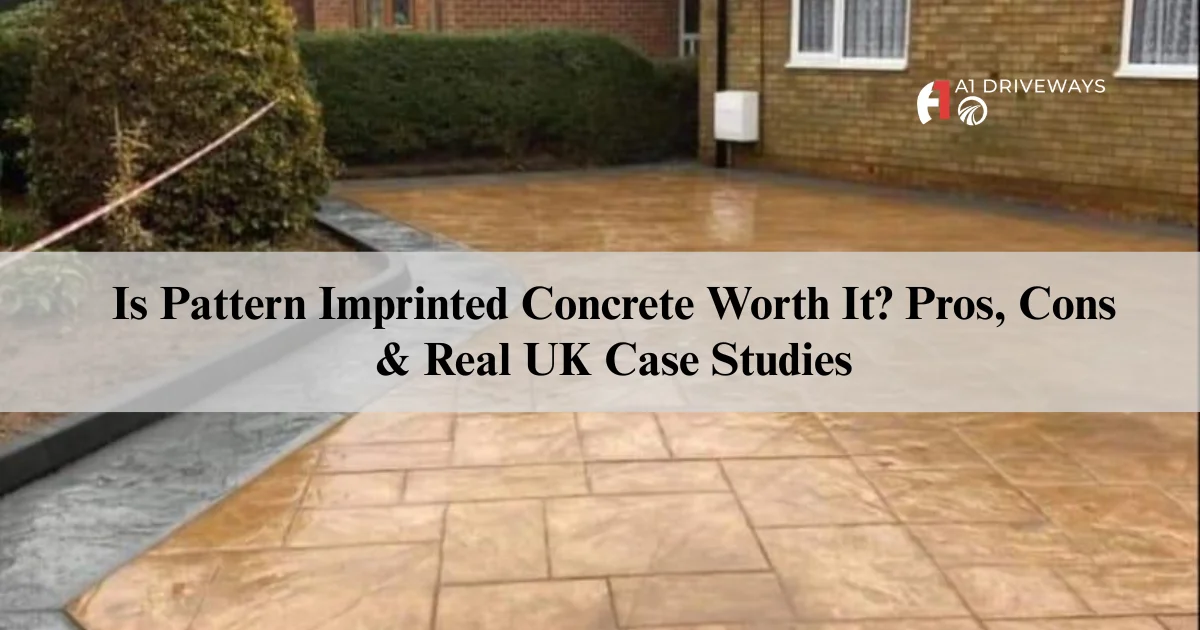
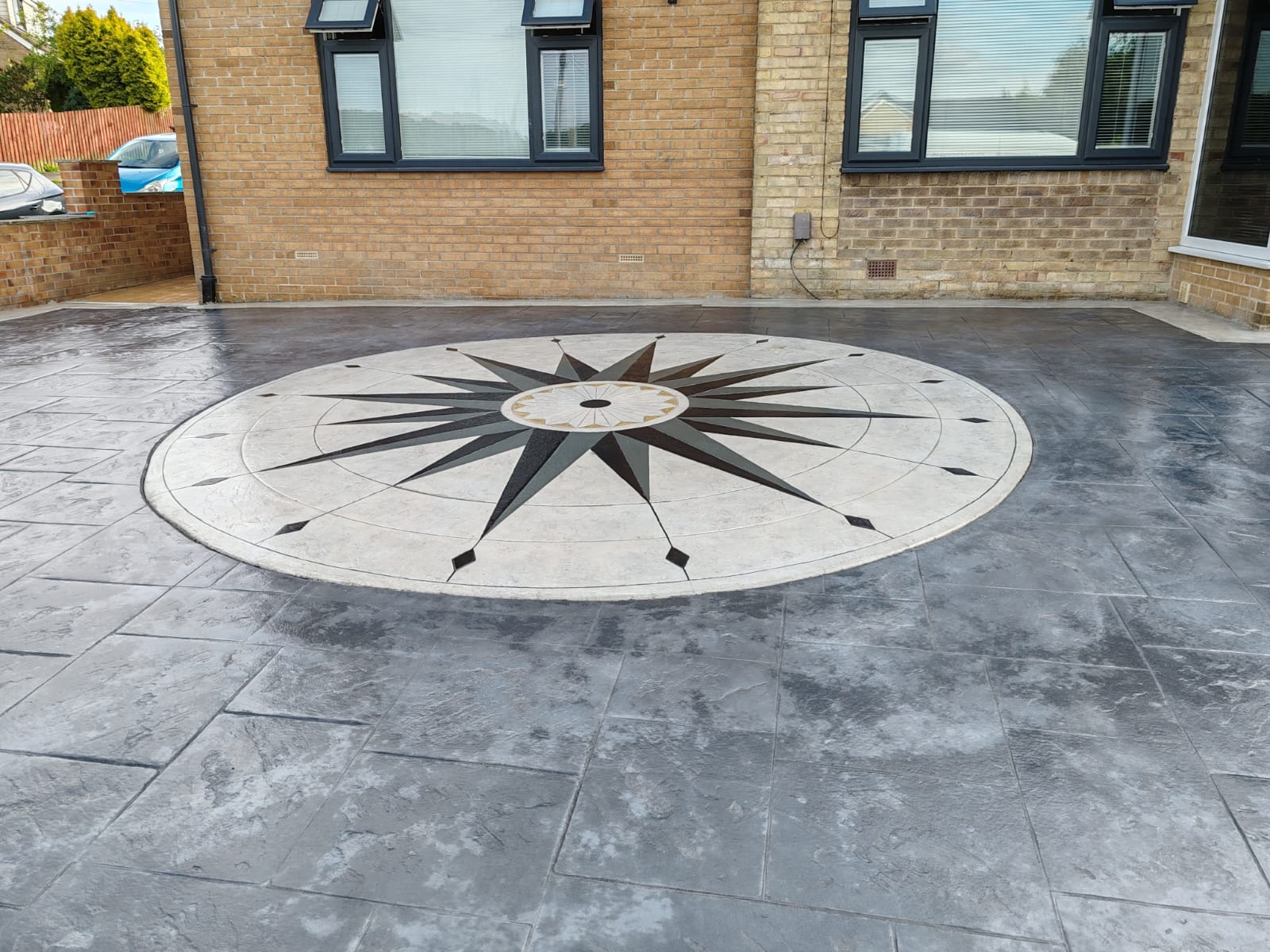
The Pros: Why So Many UK Homeowners Choose Imprinted Concrete
Let’s be direct, there are genuine, compelling reasons why imprinted concrete driveways have become one of the most popular choices across the UK. Here are the real advantages:
Advantages:
- Exceptional visual impact — Realistic stone, cobble, and slate effects at a fraction of natural material costs
- Highly durable surface — Concrete is inherently strong; a well-laid slab handles heavy vehicles with no issue
- Seamless finish — No joints means no weeds growing through, no ants, no shifting individual units
- Huge design flexibility — 50+ pattern options and virtually unlimited colour combinations
- Cost-effective vs natural stone — Typically 40–60% cheaper than natural cobblestone or sandstone flagging
- Adds kerb appeal — Dramatically improves the front of any property; estate agents agree it helps with sale prices
- Quick installation — A standard driveway can be poured and stamped in 1–2 days
- Low ongoing maintenance — Just periodic resealing every 3–5 years, no individual unit replacement needed
- No drainage permission issues (if draining correctly) — Unlike solid non-permeable surfaces, proper falls management keeps you compliant
Disadvantages:
- Cracking is a reality — All concrete can crack; visible cracks on a decorative surface are more noticeable than on plain concrete
- Difficult to repair invisibly — Patching cracked imprinted concrete is rarely seamless; colour matching after years of weathering is near impossible
- Colour fading over time — UV exposure and traffic wear will fade the colour without regular resealing
- Can be slippery when wet — Sealed surfaces can become slick in rain if a non-slip additive isn’t used
- Resealing cost — Every 3–5 years you’ll need professional resealing (£200–£500 for a typical driveway)
- Quality is installer-dependent — A poor installation with inadequate sub-base will fail badly and visibly
- Not easily permeable — Standard imprinted concrete isn’t SuDS-compliant by default; planning considerations apply for front gardens
- Vulnerable to de-icing salts — Rock salt can damage the sealer and concrete surface in winter
How Much Does Pattern-Imprinted Concrete Cost in the UK?
Cost is usually the first question, and it varies significantly depending on area, design complexity, and the depth of preparation work. Here’s a realistic breakdown of imprinted concrete costs in the UK for 2026:
Driveway Size | Area (approx) | Budget Installer | Mid-Range | Premium (e.g. A1 Driveways) |
Single car | 20–25m² | £1,000–£1,500 | £1,500–£2,200 | £2,200–£2,800 |
Double car | 40–50m² | £2,000–£3,000 | £3,000–£4,200 | £4,200–£5,500 |
Large / multi-car | 60–80m² | £3,000–£4,500 | £4,500–£6,500 | £6,500–£9,000 |
Complex design (borders, inlays) | Any | +10% | +15% | +20–25% |
What’s Included in a Professional Quote?
A properly itemised quote from a reputable installer like A1 Driveways should include: excavation and disposal of spoil, sub-base material and compaction, concrete supply (ready-mix delivered), formwork, steel reinforcement mesh, colour hardeners and release agents, stamp hire or ownership, expansion joint cutting, surface cleaning, and final sealing. If any of these are missing from a quote you receive, ask why.
Imprinted Concrete vs Other Driveway Types:
Imprinted Concrete vs. Block Paving
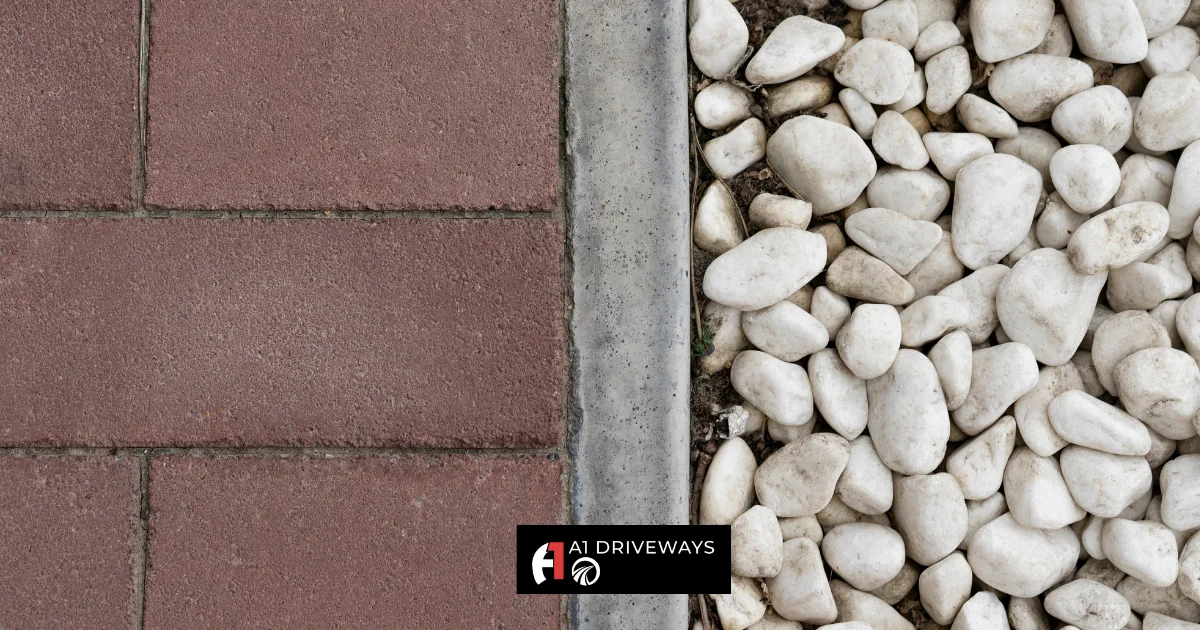
Block paving is easier to repair piece-by-piece, but imprinted concrete is much better for weed control and usually more affordable upfront. Choose paving if you expect future ground movement or utility work.
Imprinted Concrete vs. Resin Bound
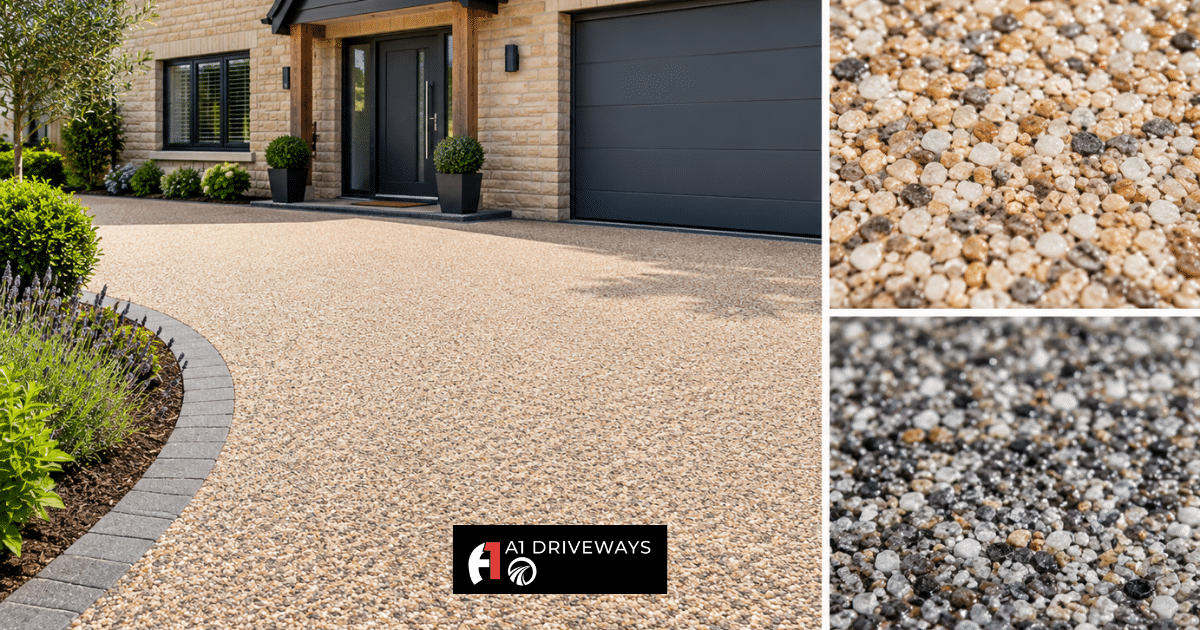
Resin is permeable (SuDS-compliant) and looks modern but costs more and lasts shorter than concrete. Choose resin if you need natural drainage or want a high-end aggregate finish without planning permission.
Imprinted Concrete vs. Tarmac
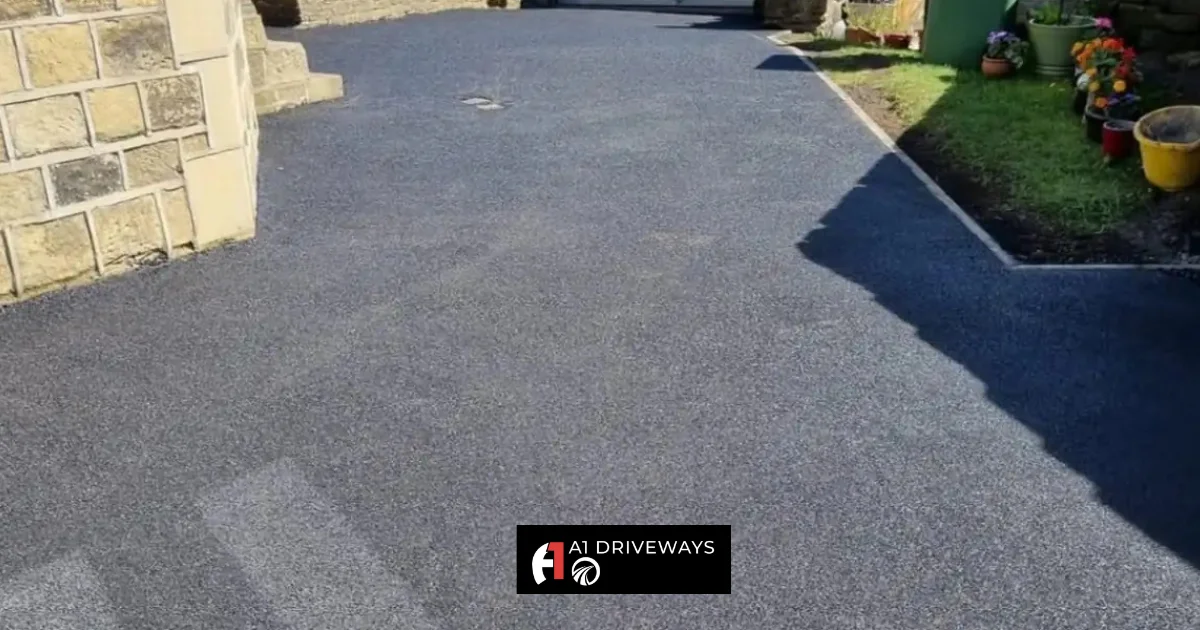
Tarmac is the fastest, cheapest “no-frills” option. Imprinted concrete is far superior for kerb appeal and adding property value. Choose tarmac for pure utility; choose concrete for a premium, decorative finish.
Maintenance: What is Actually Involved?
While low maintenance, keeping imprinted concrete in top condition requires these key steps:
- Annual Pressure Wash: Use a fan-tip nozzle once a year to remove algae and grime. Avoid aggressive jet settings that can strip the sealer.
- Reseal Every 3–5 Years: This protects against UV fading and water ingress. Skipping this leads to color loss and surface wear.
- Avoid Rock Salt: Critical. Rock salt degrades the sealer and causes surface pitting. Use concrete-safe de-icers or kiln-dried sand instead.
- Prompt Oil Cleanup: Clean spills immediately with degreaser. The sealer acts as a barrier, but oil can permanently stain if the coating is worn.
- Monitor Cracks: Inspect for new movement. Hairline cracks are usually cosmetic, but wider gaps may indicate sub-base issues.
Is Pattern Imprinted Concrete Right for You? An Honest Verdict
The bottom line: pattern imprinted concrete is an excellent driveway choice for the right homeowner in the right situation. But it isn’t universally the best option. Here’s how to think about it clearly:
You’re an ideal candidate if:
- You want a premium visual result without natural stone costs
- Weed-free, low-maintenance upkeep is a priority
- You’re happy to reseal every 3–5 years or budget for it
- Your property doesn’t have significant tree root movement nearby
- You want maximum design flexibility, patterns, borders, inlays, and colours
- You’re replacing tarmac or gravel and want a clear upgrade
Think carefully if:
- You have known sub-surface drainage problems or tree root issues
- Your front drive is large and SuDS (permeable drainage) compliance is required by planning
- You want a surface that can be easily repaired section by section without visible joins.
- You’re on a very tight budget.a cheap imprinted concrete installation is a false economy.
The lifespan of your driveway depends entirely on the contractor. A reputable installer using a solid sub-base ensures a 25+ year lifespan, whereas cutting corners leads to cracking within 3–5 years.
A1 Driveways provides full written specifications, progress photos, and a workmanship guarantee. If you’re in Leeds, Bradford, or nearby, contact us for a no-obligation consultation.
Conclusion:
Ready to Transform Your Driveway? Get a free, detailed quote from A1 Driveways — West Yorkshire’s trusted imprinted concrete specialists. No pushy sales, just honest advice and accurate pricing. Get a Free Quote now!
How long does Pattern Imprinted Concrete last?
With professional installation and resealing every 3–5 years, it can last 25 to 30 years. Longevity depends heavily on a high-quality sub-base and reinforced concrete.
Does Imprinted Concrete crack easily?
While all concrete can crack, professional installation with steel mesh reinforcement and proper expansion joints minimises the risk. Most issues are caused by poor sub-base preparation rather than the material itself.
How much does an Imprinted Concrete cost in the UK IN 2026?
Expect to pay between £50 and £100 per square metre. A standard 40m² double driveway typically ranges from £2,000 to £4,500, depending on design complexity and location.
How often does Imprinted Concrete need resealing?
To maintain colour and protection, reseal every 3 to 5 years. In high-traffic areas or harsh climates, resealing every 2–3 years is recommended to prevent water ingress.
Is Imprinted Concrete slippery when wet?
It can be, especially when newly sealed. However, adding a non-slip aggregate to the sealant is standard practice and significantly improves grip for the UK climate.
Can Imprinted Concrete Cracks be repaired?
Yes. Minor surface cracks can be filled and resealed to become almost invisible. Structural cracks may require a professional assessment to check for sub-base movement.
Does imprinted Concrete add value to the property?
UK estate agents consider it one of the most effective ways to improve first impressions and property value.
Table of Contents
Recent Post
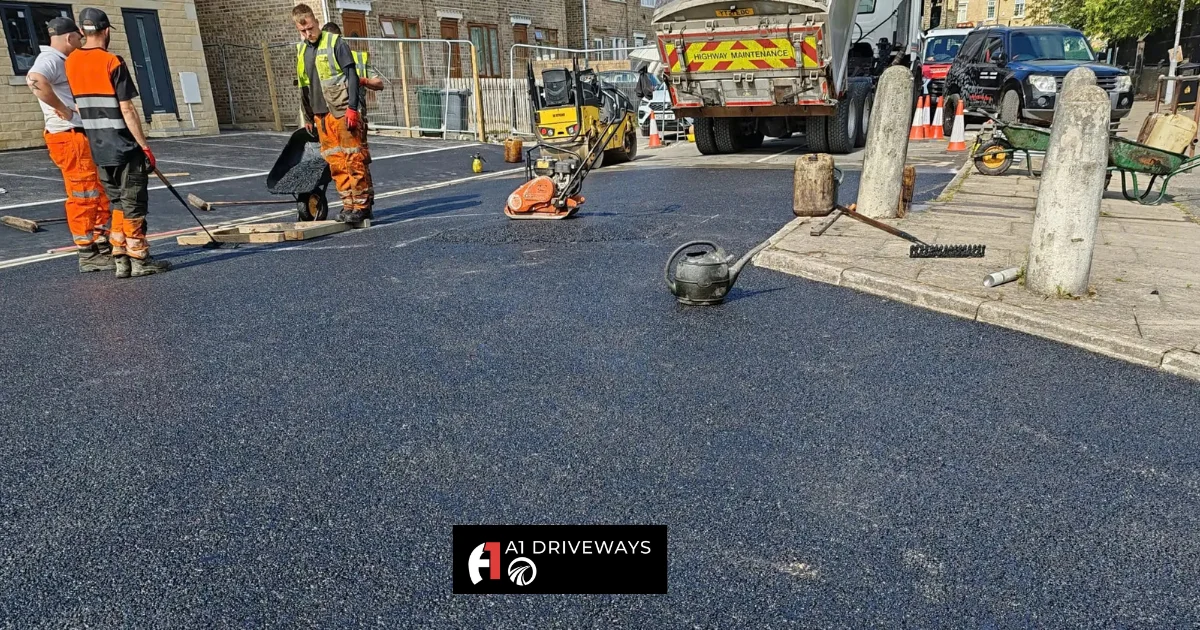
Is Tarmac Permeable?
Resin Driveway Ideas: 15+ Designs for Your Home
Which Material Is Best for Driveway Resurfacing?
How Much Does an Imprinted Concrete Driveway Cost?
Tarmac Driveway Cost | Price Per m² & Installation Costs