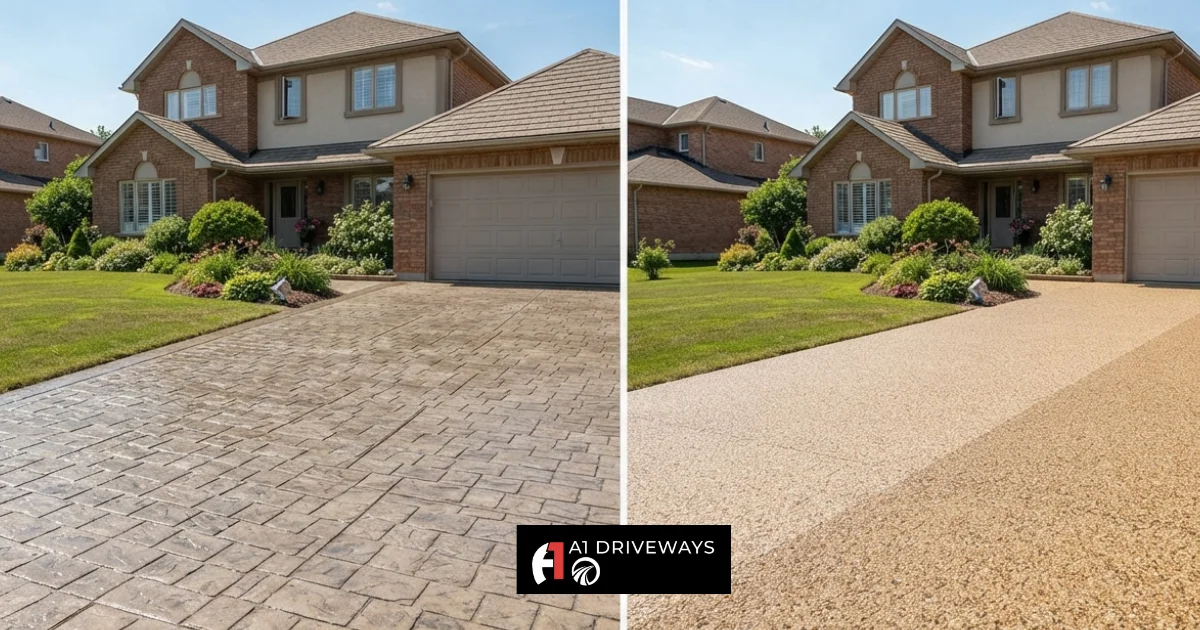
Can I Lay A Resin Driveway Myself?
We get asked this a fair bit. Someone’s seen a neighbour’s new resin driveway, liked the look of it, and started wondering whether it’s something they could knock out over a weekend. Fair enough, it looks clean, simple even. A bit of mixing, spread it out, let it set.
But if you’ve spent any time around this stuff, you’ll know it’s not quite like that.
That’s not us trying to put you off or talk you into something you don’t need. We just want to give you an honest picture of what’s actually involved, because we’ve seen too many people spend good money on materials only to end up ripping everything up and starting again.
Things To Consider Before Installing A Resin Driveway
Before you even price up materials, you need to have a proper look at what you’re working with.
The base is everything. Resin bound won’t hide problems underneath it; if anything, it tends to make them more obvious over time. You need a solid, stable sub-base that drains properly. That usually means either a well-laid Type 3 MOT with a porous tarmac wearing course on top, or an existing concrete or tarmac surface that’s genuinely in good shape, no flex, no cracking, no soft spots.
Weather matters too. You can’t lay resin in the cold. Below around 5°C the resin won’t cure properly, and if rain hits the surface before it sets, you’ve got a problem. Even high humidity on a warm day can affect the finish if you’re not used to reading those conditions.
And there’s the drainage angle. A properly installed resin bound surface is permeable, which means it meets the planning rules around paving over front gardens without needing additional drainage. But that only works if the mix is right and the base allows water through. Get that wrong and you’ve got an impermeable surface that shouldn’t be there and a job that needs redoing.
Benefits Of Using Resin Bound For Your Driveway
It’s worth being clear on why resin bound has become as popular as it has, because it genuinely is a good product when it’s done properly.
It lasts. A well-installed resin driveway will typically see you through 15 to 25 years without much fuss. No loose stones pinging off onto the road, no weeds pushing through every spring, no individual blocks sinking and becoming trip hazards. It’s low maintenance in the truest sense.
It also looks the part. There are dozens of aggregate blends available, from warm sandy tones to darker contemporary mixes, so you can get something that actually suits the house rather than just defaulting to whatever the builder laid. Smooth enough for wheelchairs and bikes. Clean underfoot. It does what it says.
How To Install A Resin Bound Driveway
Right, so if you’re set on giving it a go yourself, here’s the honest rundown of what’s involved. For a more detailed breakdown, you can read our full step-by-step guide here:
1. Base Preparation
This is where most DIY attempts fall down, and it's the hardest part to get right without experience. You need to check the structural integrity of what's underneath, sort any drainage gradients, repair existing cracks, and make sure the surface is clean and dust-free before anything goes down.
If your existing tarmac has movement or soft areas, that needs dealing with first — not after the resin goes on top.
2. Mix The Resin Bound Gravel
This is where most DIY attempts fall down, and it's the hardest part to get right without experience. You need to check the structural integrity of what's underneath, sort any drainage gradients, repair existing cracks, and make sure the surface is clean and dust-free before anything goes down.
If your existing tarmac has movement or soft areas, that needs dealing with first — not after the resin goes on top.
3. Lay Your Resin Bound Surface
The material goes down at around 15–18mm and gets spread with a squeegee. Sounds simple. In practice, you need to keep a consistent pace across the whole area so you don't get visible joins or patches where it's started to go off. Edges around drains, walls, and kerbs need a tidy hand. Any hesitation shows up in the finish.
Will My Resin Bound Driveway Ever Crack?
Short answer: it shouldn’t, if the base is right.
Resin bound has a bit of give in it, so minor ground movement isn’t usually a problem. What causes cracking is almost always something going on underneath — a base that wasn’t stable to begin with, water getting trapped and freezing in winter, tree roots, or areas where the sub-base has different depths and behaves differently under load.
That’s why you can’t cut corners on the groundwork. A crack in a resin surface is rarely about the resin it’s about what wasn’t done properly before it went down.
What Are The Challenges Of DIY Resin Driveways?
Proper Base Preparation
You're essentially doing a structural assessment of your existing surface before you start. Without experience, it's genuinely difficult to know what you're looking at whether a hairline crack is just surface-level or whether there's movement underneath that'll cause issues in six months.
Correct Resin Mixing
The margin for error is tighter than it seems. A slightly off ratio, an under-mixed batch, or material that's been sitting too long before it went down any of these will show up in the finished surface and potentially affect how well it holds up.
Specialised Tools And Techniques
The forced-action mixer alone is a significant hire cost. Add spreading tools, edging boards and the need for a couple of pairs of hands working in sync and it starts to feel less like a weekend project.
UV Resistance And Longevity
This one catches people out. Budget resin kits exist and some of them are fine on paper. But cheaper resins can yellow, go brittle, or start breaking down within a few years when exposed to sunlight. Knowing which products to trust and which suppliers cut corners comes from being in the trade and seeing what holds up over time.
Why DIY Can Cost More
Here’s the bit people don’t always account for upfront.
Hiring a forced-action mixer, buying materials at retail prices rather than trade, getting the tools together, and giving up a weekend or two, it adds up. And that’s before anything goes wrong. If the base prep wasn’t quite right, or a batch of mix went off before it was spread properly, you could be looking at stripping the whole thing back and starting again. At that point you’re paying twice.
Professional installers buy materials at trade prices, own their equipment, and have the experience to spot problems before they become expensive. The gap between DIY cost and professional cost is usually a lot smaller than people expect and that’s without accounting for the risk.
Why Professionals Make All The Difference
Expertise You Can Rely On
When someone has laid a few hundred driveways, they've seen the problems that crop up and they know how to handle them before they become issues. That's not something you pick up from a how-to video.
High-Quality Materials And Equipment
Trade-grade materials, the right kit, and the knowledge to use it properly. The finish is different, and so is how long it lasts.
Aesthetic Customisation
A decent installer will sit down with you and actually look at your property, the brickwork, the boundary edges, the light, and help you pick something that works. It's not just about picking a colour from a chart.
How Can A1 Driveways Help?
We’ve been doing this across West Yorkshire for over ten years, Bradford, Leeds, Huddersfield, Halifax, Dewsbury, Wakefield. We use UV-stable, SuDS-compliant systems on properly prepared bases, because that’s the only way to do a job that still looks good in fifteen years.
Every quote is free and comes with a proper look at your existing surface. No obligation, no guesswork.
Ready To Upgrade Your Driveway?
If you’re thinking about a resin bound driveway and you want a straight conversation about what it involves and what it would cost, give us a call on 01274 028102 or head to A1 Driveways.
We’ll come out, take a look, and give you an honest assessment, whatever you decide to do with it.
Table of Contents
Recent Post
Which Material Is Best for Driveway Resurfacing?
How Much Does an Imprinted Concrete Driveway Cost?
Tarmac Driveway Cost | Price Per m² & Installation Costs
Best Block Paving Driveway Ideas