Resin Driveway Ideas: 15+ Designs for Your Home
Looking for resin driveway ideas? Resin bound surfacing simply gives you more design than block paving, tarmac or concrete. You get dozens of colour blends, border options, patterns and layouts to pick from, and it still stays permeable, low maintenance and durable for 15 to 25 years while doing it.
This guide walks through the resin driveway ideas we see work best on real UK homes, how to pick a design that actually suits your property, what it’s likely to cost and how to keep it looking sharp for decades rather than just the first summer. We’ve also included resin patio ideas and resin garden path ideas along the way, because most people planning a new driveway end up eyeing up the rest of the garden too, whether they meant to or not.
At A1 Driveways, we install resin bound surfaces across the UK, so what follows is based on what we’ve actually seen hold up on real properties, not what looks nice in a brochure.
Why Resin Bound Is the Best Choice for Driveway Design
Resin bound comes out on top for most driveway projects, it’s fully permeable, SuDS compliant, low maintenance, and comes in a far wider range of colours and finishes than resin bonded, block paving or tarmac.
Worth clearing up the terminology first, since “resin bound” and “resin bonded” get mixed up constantly, even by people who’ve had quotes for both.
Resin bound is mixed thoroughly before it goes down, aggregate and resin combined evenly, then trowelled onto the surface. That’s what gives you that smooth, seamless finish where water just passes straight through instead of pooling on top. It’s comfortable underfoot, keeps weeds out, and meets SuDS requirements, which is why it’s behind almost every modern driveway project now.
Read our guide on resin bound driveway installation.
Resin bonded works the other way round. Resin goes onto the base first, then loose aggregate gets scattered over the top and pressed in. It’s got more of a gravelly texture, and it isn’t permeable, which is why it’s used far less for driveways that need to meet UK drainage rules.
For a driveway design, resin bound is almost always the smarter call. A few reasons it keeps winning out:
- Design flexibility: near-endless colour and aggregate combinations, plus borders, patterns and inlays if you want them
- SuDS compliance: fully permeable, so most domestic driveways won’t need planning permission
- Durability: laid properly, it typically lasts 15 to 25 years
- Low maintenance: no weeds pushing through, no gravel migrating across the drive, easy to clean
- UV stability: decent resin systems resist fading, so the colour you picked stays the colour you picked
How to Choose the Right Resin Driveway Design for Your Home
The right design comes down to three things: what your property already looks like, the light and materials on your frontage and any drainage or slope issues on site. Get those sorted first and pretty much any colour or pattern you choose afterwards will look like a decision, not a guess.
Match the Driveway to Your Property Style (Period, Modern, Rural)
A driveway should feel like it actually belongs to the house in front of it, not like something picked off a catalogue with zero thought for the building behind it.
- Period and traditional homes usually suit natural stone blends, warm neutrals and softer greys that echo the original brick or stonework.
- Modern and new-build properties tend to look sharper in charcoal, graphite or cool grey, especially next to black window frames and rendered walls.
- Rural and leafy properties often work best with natural aggregate blends and gold or sandy tones that sit happily alongside the greenery and older stonework around them.
Consider Light, Colour and Surrounding Materials
Light changes how resin colour actually reads through the day, so it’s worth looking at sample blends in both sun and shade before you commit to anything. A colour that looks perfect on a small showroom board can read quite differently once it’s laid across a whole driveway under a grey British sky.
Take a proper look at your roof tiles, brickwork, window frames and front door together. The driveway designs that work best usually pull a tone from one of these existing features rather than introducing something new that clashes with everything else on the front of the house.
Factor in Drainage, Slope and SuDS Requirements
Resin bound is fully permeable when it’s installed properly, which is a big part of why it’s used so widely for driveways and front garden projects. Under UK planning rules, a permeable driveway over 5m² in front of a house generally doesn’t need planning permission, while a non-permeable surface of the same size usually does.
Slope matters here too. A gentle fall away from the house is normally enough for resin bound to drain naturally on its own, but steeper driveways may need channel drainage built into the design. It’s worth raising this with your installer at survey stage, not after you have already picked a design, since it can affect layout and where borders sit.
Resin Driveway Colour Ideas
There isn’t one “best” resin driveway colour. The right one is whatever complements your home’s existing brickwork, roofline and window frames rather than fighting them. That said, grey remains the most requested colour across the UK, with gold and natural stone blends close behind.
Best Colours for Modern Homes
Charcoal, graphite and cool mid-greys are the go-to resin driveway colours for modern homes. They read as clean and a bit architectural, particularly against white or grey render, black window frames and flat-roofed extensions. They’re also forgiving on dirt and tyre marks, which matters more than people expect once the drive is actually in daily use.
Best Colours for Period & Traditional Homes
Warm greys, buff tones and classic stone blends tend to suit period properties best, since they echo the materials these homes were originally built with. We’d usually steer people away from anything too stark or monochrome on a Victorian or Georgian frontage, it just doesn’t sit right. A softer, more natural palette tends to age better and looks like it was always meant to be there.
Natural, Warm & Golden Tones for Rural Properties
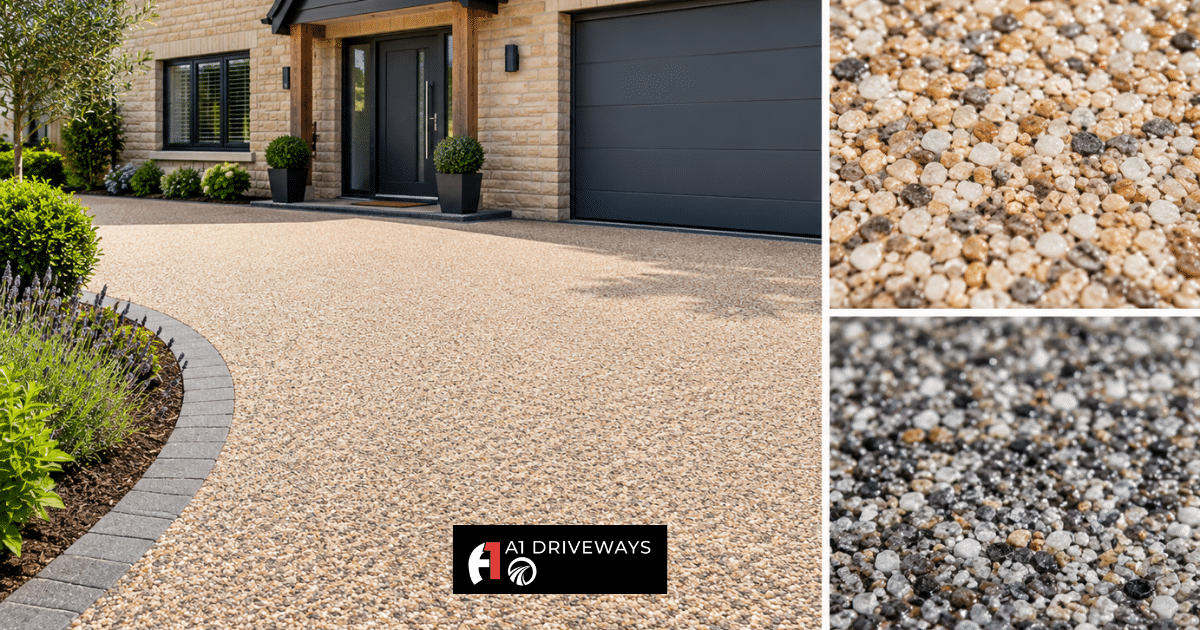
Golden and honey aggregate blends work particularly well on rural and leafy properties, where the driveway needs to sit comfortably against greenery, hedgerows and stone walls. These warmer tones also lift shaded or north-facing driveways that a plain grey blend can leave looking a bit flat and cold.
Popular Colour Combinations (comparison table)
Colour Family | Best Suited For | Visual Effect |
|---|---|---|
Light and mid greys | Modern homes, new builds | Clean, contemporary, hides dirt well |
Charcoal and graphite | Contemporary architecture, dark window frames | Bold, structured, sharp contrast |
Golden and honey blends | Rural, period, leafy settings | Warm, natural, welcoming |
Natural stone mixes | Traditional and period homes | Timeless, subtle variation |
Two-tone or multi-blend | Any property, used with borders | Bespoke, adds depth and texture |
Top Resin Driveway Design Ideas
These are the resin driveway ideas people actually ask us about, based on real installations rather than stock photography. What works best depends on your property style, budget and driveway size, so think of this as a starting point for a conversation with your installer rather than a fixed menu you have to pick straight off.
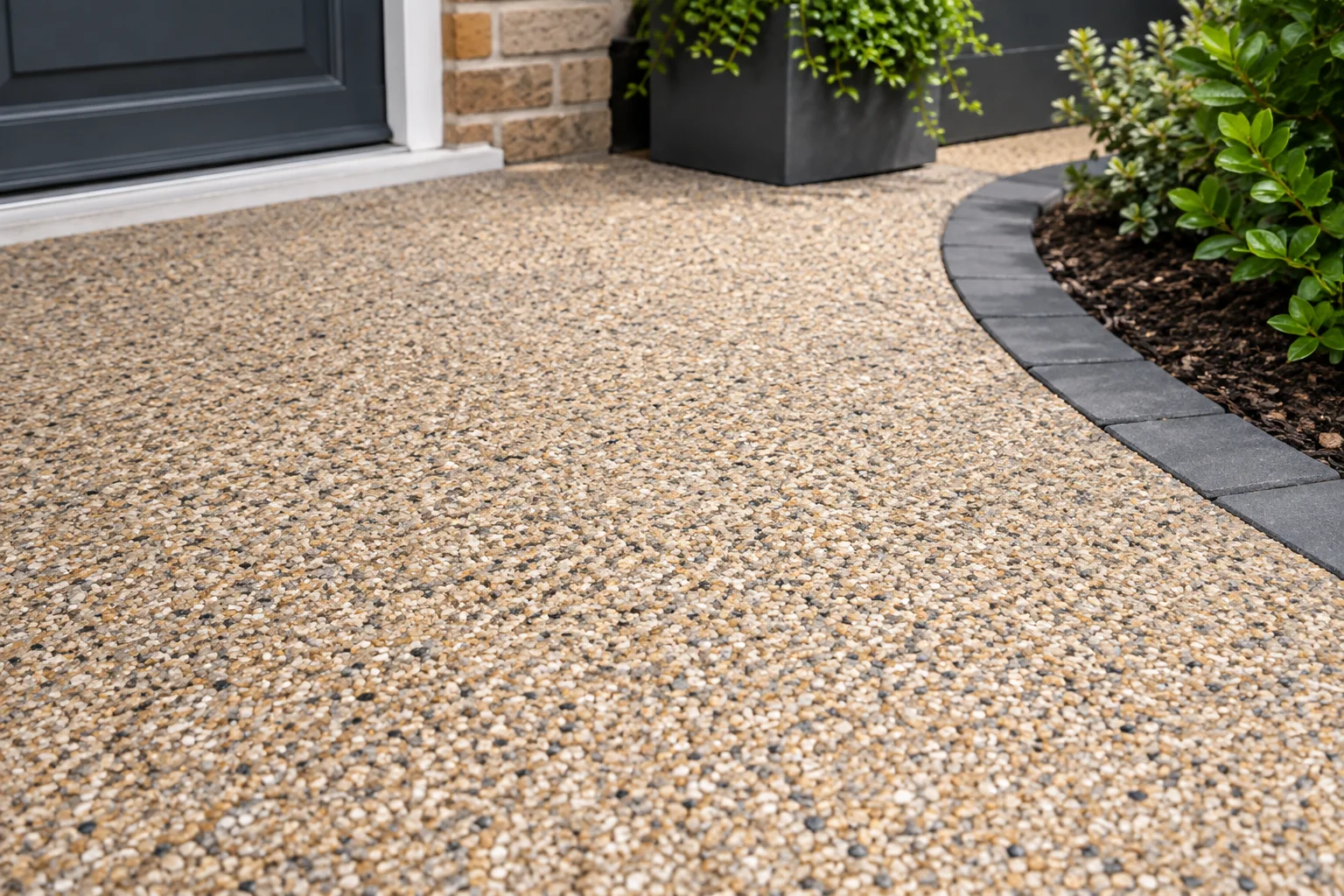
1. Natural Stone-Inspired Blends
Using aggregates that mimic marble, granite or quartz gets you the look of natural stone paving without the natural stone price tag and with a fully permeable, low maintenance surface as a bonus. It’s one of the most requested resin driveway ideas among homeowners who want something that reads as premium without the upkeep real stone demands.
2. Contrasting Border Designs
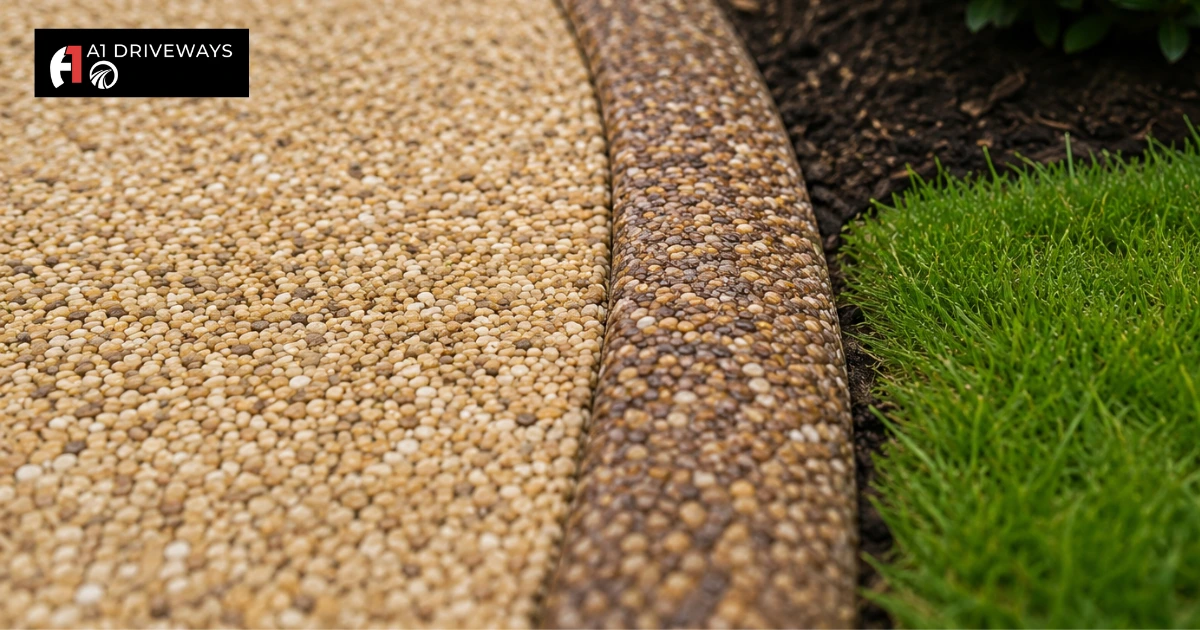
A darker resin border around a lighter central area (or the other way round) frames the driveway and gives it a finished look, rather than one flat slab of colour. Borders also take the brunt of wear in high-traffic spots and help mark out where parking bays or paths begin.
3. Multi-Tone & Mixed Aggregate Finishes
Blending two or three complementary aggregate colours brings in visual depth and texture that a single flat colour just can’t match. It’s a good route for homeowners who want something genuinely bespoke that still reads as coherent, rather than busy or mismatched.
4. Geometric Patterns & Bespoke Inlays
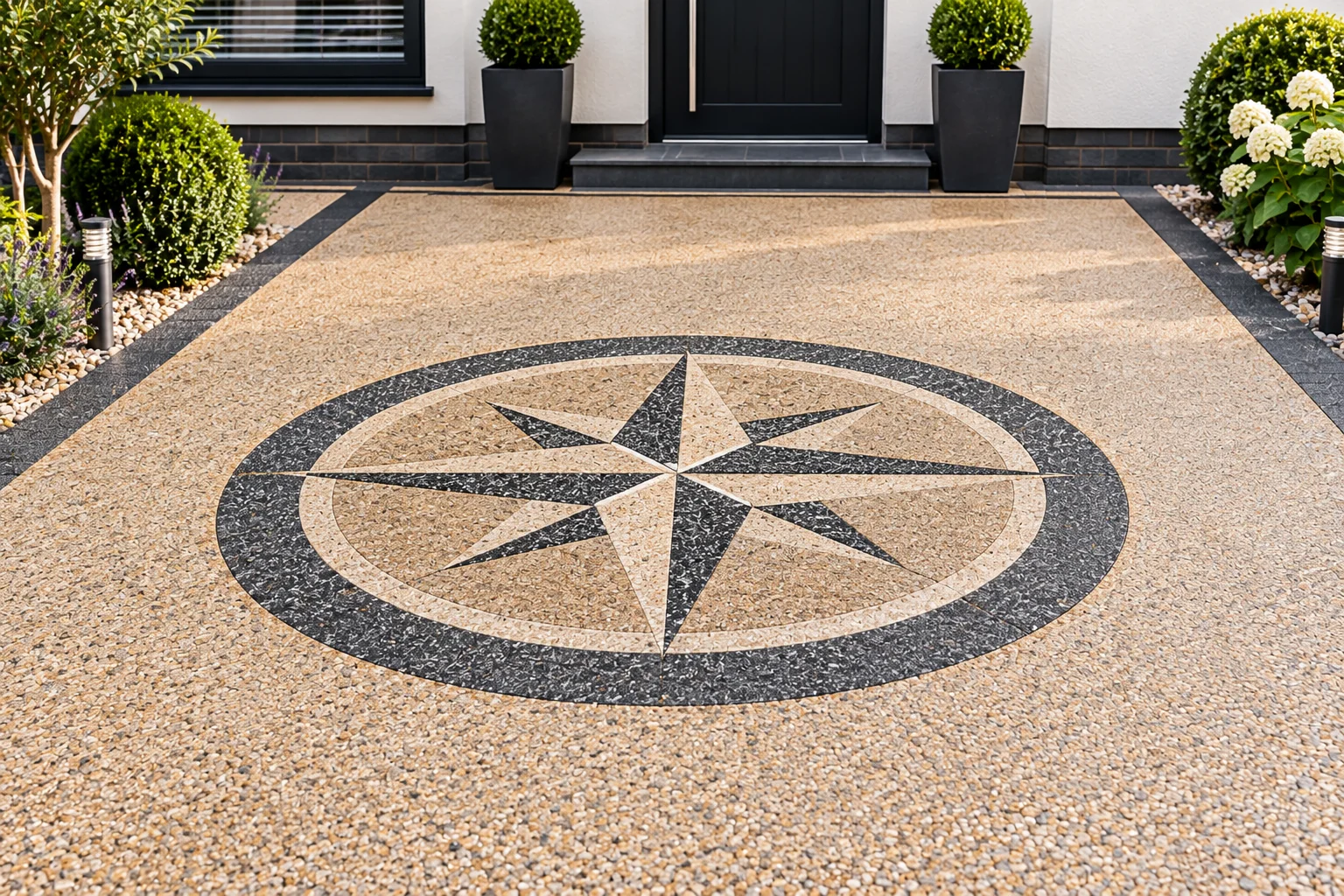
Because resin bound goes down as one continuous surface, it can incorporate house numbers, geometric shapes, compass motifs or family crests right into the design during installation. These work best kept as a focal point rather than spread across the whole driveway. Restraint tends to age better than a driveway trying to do too much at once.

5. Curved & Sweeping Layouts
Moving away from the standard straight, rectangular driveway shape softens the whole look of a property and tends to suit corner plots or larger frontages particularly well. Curved edges also make a driveway feel like it was actually designed, rather than dropped in as an afterthought.
6. Monochrome (Black, Grey & Charcoal) Driveways
Black, graphite and deep grey resin blends give a driveway a rich, modern tone that pairs well with contemporary architecture and simpler landscaping. These darker blends also tend to hide staining over time better than very light or white finishes do.
7. Feature Medallions
A circular or square motif set into the surface, often placed centrally on larger driveways, works well as a standout focal point without needing a pattern across the whole area. It’s one of the more intricate resin driveway ideas on this list, usually achieved by blending different stone colours at the mixing stage rather than adding detail on top afterwards.
8. Permeable Planting Strips
Running a gravel or planting strip along one edge of the driveway adds a bit of greenery, helps with drainage and softens the handover between the resin surface and the rest of the garden. It’s a simple way to bring some garden resin ideas into a driveway project without needing a full redesign.
9. Statement Entrances, Pillars & Lighting
Widening the entrance point, adding stone pillars, or putting in some low-level lighting along the driveway edge lifts the whole impression before anyone even reaches the front door. Pair these with a strong resin colour or border and you have got one of the highest-impact kerb appeal upgrades available for the money.
Resin Driveway Border and Pattern Ideas
Borders are one of the simplest ways to take a resin driveway design from “functional” to “actually finished,” and they cost a fair bit less than a full pattern or inlay would.
Contrasting Resin Borders
A single-band border in a contrasting colour is the most requested border style we install, since it frames the driveway clearly without taking over the whole design. Dark borders around a light centre generally suit modern homes, while lighter borders around a warmer central blend tend to work better on period properties.
Combining Resin with Block Paving or Stone Edging
Where a property already has brick or stone detailing, using a matching edging material instead of a resin border creates a stronger sense of continuity between the driveway and the house. It’s also a slightly more traditional finish, which suits period homes particularly well.
Geometric Patterns, Inlays and House Numbers
Beyond a simple border, resin allows for real bespoke detail, house numbers, geometric bands, full motifs mixed directly into the surface. We’d usually recommend using these as an accent rather than across the entire driveway. A bit of restraint tends to age far better than a design trying to show off everything at once.
Resin Driveway Ideas by Size
The right resin driveway design shifts depending on how much space you’re actually working with. A layout or pattern that looks striking on a large forecourt can easily overwhelm a small front garden.
Small or Narrow Driveways
Lighter, single-tone colours help a small driveway feel more open and a simple single-line border is usually enough definition without making the space feel cluttered. We’d avoid multiple patterns or bold two-tone splits on a small area. They tend to make the space look smaller, not more interesting.
Medium-Sized Driveways
Medium driveways have enough room to bring in a contrasting border and a simple zone split, such as a defined parking bay separated from a path to the front door. Most of the ideas covered above work well at this size without needing to go overboard.
Large or Multi-Car Driveways
Larger driveways and multi-car frontages generally benefit from being broken up visually, whether that’s banding, a feature medallion, or a shift in aggregate tone between the main parking area and access routes. Without some kind of division, a big single-colour resin driveway can start to look more like a car park than part of a home.
Are Resin Driveways SUDS Compliant and Environmentally Friendly?
Yes, when installed correctly, resin bound driveways are fully permeable and SuDS compliant. Water drains through the surface into the base and then into the ground or a soakaway, which reduces surface water run off and helps manage flood risk.homebuilding.co+1
This makes resin bound a strong choice for:
- Front gardens over 5m² where planning rules apply
- Sloped sites where drainage is a concern
- Homeowners who want an eco friendly, permeable surface
Resin bound systems also use natural aggregates and UV stable resins designed for long life, which reduces the need for frequent replacement.
How Much Does a Resin Driveway Design Cost?
Resin driveway costs in the UK typically fall between roughly £45 and £90 per square metre, depending on the aggregate blend, the condition of your existing base and whether the design includes borders, patterns or custom features. A standard mid-sized driveway often ends up somewhere between £2,500 and £6,000 all in.
Price Ranges by Colour and Aggregate Type
- Standard blends – typically the most cost effective option, ideal for clean, uniform colours.
- Premium and natural stone blends – higher per m² cost but add significant kerb appeal and uniqueness.
- Bespoke multi-tone mixes – priced according to the number of aggregates and complexity of the blend.
Exact prices vary by site conditions, base preparation and your location in West Yorkshire or the North of England.
Extra Costs for Borders, Patterns and Custom Features
Contrasting borders usually add a modest amount to the total, since they need a second colour mix and more careful edging work. Bespoke inlays, house numbers, medallions and full pattern work add more on top of that, reflecting the extra time and skill it takes to build these details into the surface properly.
Getting an Accurate Quote
To get an accurate quote, your installer will need:
- Approximate size and shape of the driveway
- Current surface and condition
- Access constraints and any drainage issues
- Your preferred colour, border and pattern ideas
A site visit is the best way to confirm specifications and pricing for your specific resin driveway ideas.
Do Resin Driveway Designs Last? (Maintenance & Longevity)
Yes, a properly installed resin bound driveway typically lasts 15 to 25 years and the design itself holds up well over that time as long as the resin used is UV-stable and the surface gets a bit of basic care along the way.
Cleaning Without Damaging the Finish
A gentle jet wash a couple of times a year, along with cleaning up oil or fuel spills promptly, is usually enough to keep a resin driveway looking close to new. Just avoid blasting it with excessive pressure directly on the surface, since that can loosen aggregate over time if it’s used incorrectly.
Preventing Fading, Stains and Weed Growth
UV-stable resin systems resist fading a lot better than the cheaper alternatives, so it’s worth confirming exactly what system your installer is using before work begins. The permeable, seamless nature of resin bound also makes weed growth far less of an issue than with gravel or block paving, simply because there are no gaps for seeds to settle into.
Typical Lifespan of a Designer Resin Driveway
Most designer resin driveways last:
- 15 to 25 years with proper installation and basic care
- Longer where the base is robust and traffic levels are moderate
Investing in a quality base and experienced installers is the single biggest factor in achieving a long lifespan.
How to Choose the Best Resin Driveway Design for Your Home
Choosing the right resin driveway design really comes down to matching colour and layout to your property, confirming the surface will meet SuDS drainage requirements and getting a written quote based on an actual site visit rather than guesswork.
Start with the architecture of your home and whatever materials are already in place. Narrow the colour choice down to two or three options and look at samples in different light. Decide whether a border, pattern or inlay makes sense for your budget and the size of the space. Then bring in someone experienced who can confirm ground prep, drainage and the final design details before anything gets laid.
A resin driveway is a long-term investment in how your home looks and functions day to day, so it’s worth spending a bit more time getting the design right at the planning stage rather than trying to fix it after installation.
Frequently Asked Questions
What is the best colour for a resin driveway?
There’s no single best colour, but grey is the most popular choice across the UK because it looks modern and hides everyday dirt well. The right colour really comes down to what complements your walls, roof and window frames and neutral tones tend to age better and appeal to more buyers if you’re thinking about resale down the line.
Can resin driveways have patterns or borders?
Yes. Because resin bound goes down as one continuous surface, it can include contrasting borders, mixed-aggregate blends, banding, house numbers and even feature medallions while staying smooth and fully permeable.
Do I need planning permission for a resin driveway?
Usually not. A permeable driveway, which resin bound is when it’s installed correctly, typically doesn’t need planning permission even over 5m², unlike non-permeable surfaces such as standard block paving or tarmac laid over that size.
How long does a resin driveway design last?
A properly installed resin bound driveway typically lasts 15 to 25 years, including any borders, patterns or bespoke features built into the design, as long as the sub-base was prepared correctly and a UV-stable resin was used.
Which resin colour shows the least dirt?
Mid to dark greys and charcoal blends tend to hide everyday dirt and tyre marks the best, which is a big part of why grey remains the most requested resin driveway colour in the UK.
Can I use resin on a sloped driveway?
Yes, resin bound can be used on sloped driveways, though steeper gradients might need extra channel drainage built into the design to manage water flow properly. This is something an experienced installer should assess at survey stage rather than something worth guessing at from photos.
Is a resin driveway a good investment?
For most UK homes, yes. A well-designed, properly installed resin driveway improves kerb appeal, typically lasts 15 to 25 years, needs very little upkeep and is generally viewed positively by buyers when it comes to resale, provided the installation and drainage were done properly from day one.
Ready to design your resin driveway?
At A1 Driveways, we offer free, no-obligation site surveys across the UK, with honest advice on colour, borders and design options tailored to your property. Get in touch for your written quote and start planning a driveway design that will still look sharp in fifteen years’ time.