Gravel Driveway Ideas: Designs and Edging
Gravel gives a driveway something tarmac rarely manages: character. It’s also one of the cheapest surfaces you can have professionally laid, and it drains beautifully. But the good-looking gravel drives you see online all share the same things: proper edging, a compacted base and a layout that suits how the family actually parks. Here are the gravel driveway ideas we build across West Yorkshire.
Are gravel driveways a good idea?
Yes, for most UK homes, if it’s built properly.
Gravel is affordable, drains freely, goes down fast and is easy to repair. The trade-offs are a loose surface that needs edging, a little raking each season, and a poor fit where steep slopes or step-free access matter.
Think twice if your drive is steep, someone at home uses a wheelchair every day, or heavy leaf fall would put you off raking. Gravel grids (covered below) solve many of these problems, and we’ll tell you straight at the free site visit if gravel isn’t right for your property.
Gravel driveway ideas that work in UK weather
Pinterest is full of gorgeous drives that wouldn’t survive a Yorkshire winter. These are the ones we’d happily put our name to.
Modern gravel driveway ideas
- Grey or charcoal gravel with slim steel edging. Crisp, dark and uncluttered. Grey also hides leaves, tyre marks and dust better than very pale stone.
- Gravel between paved wheel tracks. Block-paved or sett strips carry the tyres, gravel fills the middle, and you get clear tracks and a firmer surface.
- One stone colour, one edging, one or two plants. Less looks more expensive.
- Low-level lighting along the border. Warm white suits traditional houses; cooler white suits modern ones.
Traditional and cottage-style gravel ideas
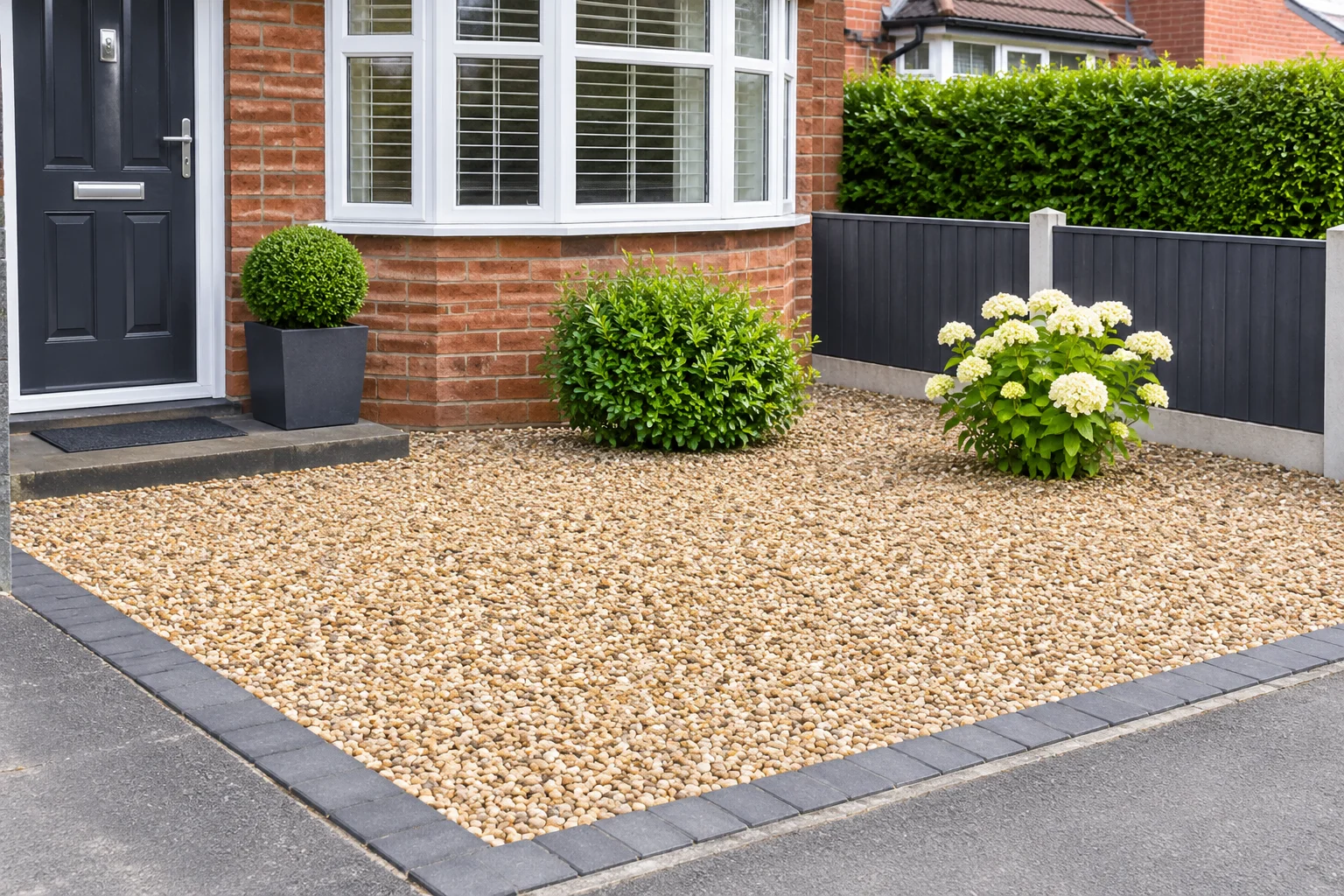
Golden, buff and honey-coloured stone gives a warm, welcoming entrance, especially with brick houses. Pair it with brick, reclaimed stone or timber edging and a planted border of lavender, rosemary or low grasses. Keep planting slightly back from the wheel line so cars don’t damage it and stone doesn’t spill into the beds.
Cheap gravel driveway ideas that still look good
Cheap gravel driveway ideas save money in the right places:
- Keep it simple. One colour of 14 to 20mm angular gravel beats mixed decorative stone on price.
- Spend on the base, not the surface. A thin layer over a weak base means redoing it within two years.
- Top up, don’t rebuild. If the sub-base is sound, refreshing the surface costs roughly half of a new build.
- Use gravel only where you drive or park, and grids only on slopes or parking bays.
- Skip fussy curves and steps. They add labour fast.
Never save money by skipping the sub-base, membrane or edging. Those are the bits that stop sinking, weeds and runaway stone.
Gravel front garden ideas
Turning a front garden into parking? These gravel front garden ideas keep it feeling like a garden:
- A curved drive rather than a straight line to the garage.
- Planting pockets with membrane underneath and gravel mulch on top. Lavender, grasses, hebes and hardy geraniums cope well.
- A paved path or stepping stones to the front door, so nobody wades through loose stone in wet weather.
- A screened bin store and a low hedge or wall along the boundary.
Layout and finishing ideas
- Turning circle or in-and-out drive. On larger plots it saves reversing onto a busy road. Use a grid in the high-stress turning area.
- Marked parking bays in setts or a contrasting stone tidy up a wide drive.
- Two-tone gravel, dark edges with a pale centre or the reverse. Stick to two colours, because more looks cluttered.
- Gravel grids. These cells hold the stone in place, reduce rutting and make wheeling bins easier. They still need a proper sub-base beneath.
- Plan the practical bits such as bin spots, bike storage and an EV charger duct before the stone goes down.
Gravel driveway edging ideas: the bit most guides skip
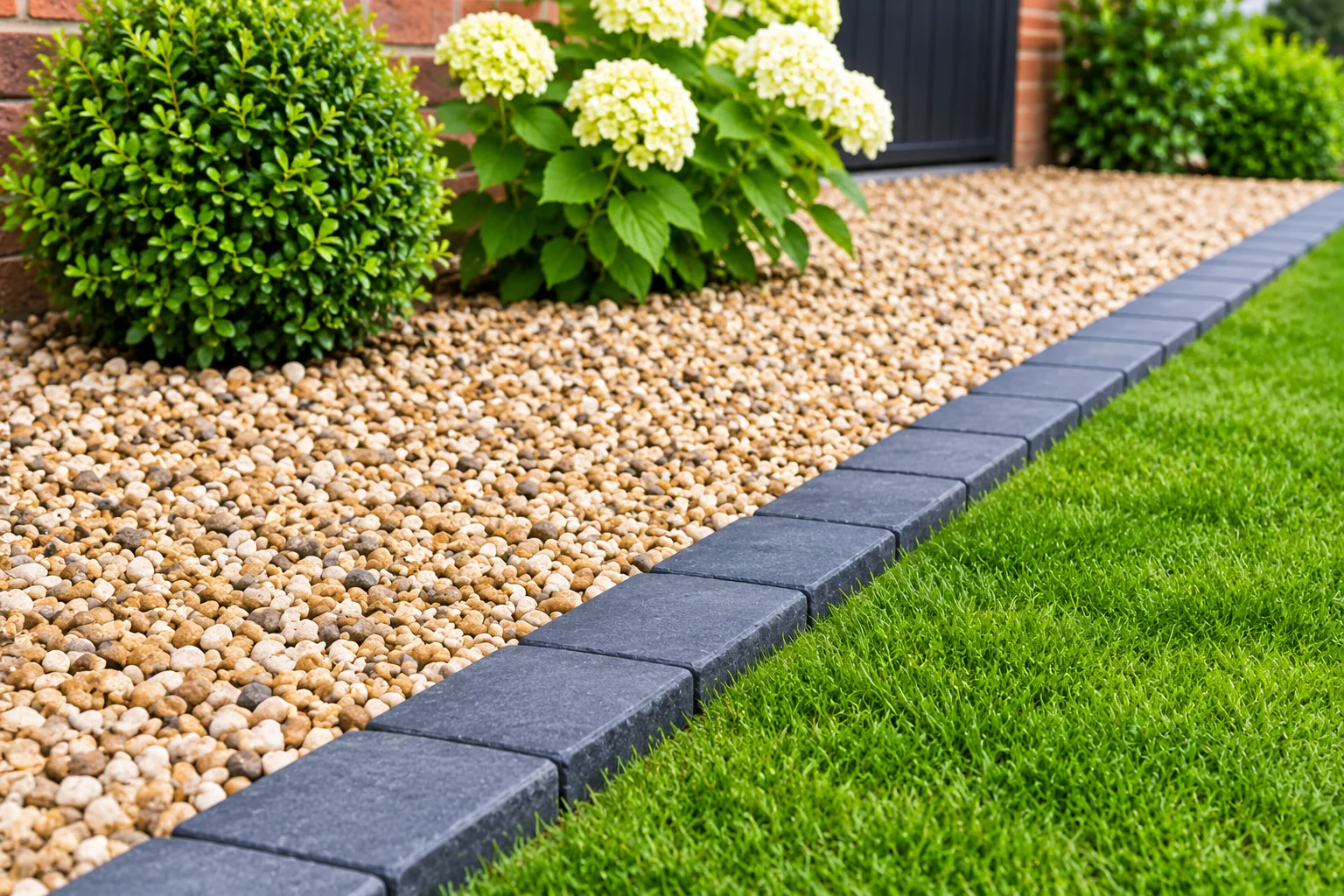
Edging decides whether a gravel drive looks smart or scruffy. Without it, tyres push stone onto your lawn and path, and the edges slump. Below are the gravel edging ideas we fit most often. People also search for ideas for edging a gravel driveway, ideas for edging gravel driveway boundaries and ideas for gravel driveway edging. They all mean the same thing: keeping the stone where it belongs.
Best gravel edge ideas by material
These are the driveway edging ideas gravel driveways rely on most:
- Brick: classic and warm, ideal for cottages and period homes. Set it at the right height. Too high traps water and becomes a trip hazard; too low and stone spills over.
- Pressed steel or aluminium: slim, modern and precise.
- Concrete kerbs: tough and practical for family drives.
- Natural stone and granite setts: premium and long-lasting. Pale limestone suits grey gravel; dark granite suits golden stone.
- Treated timber boards: soft and budget-friendly, though they rot eventually in wet ground.
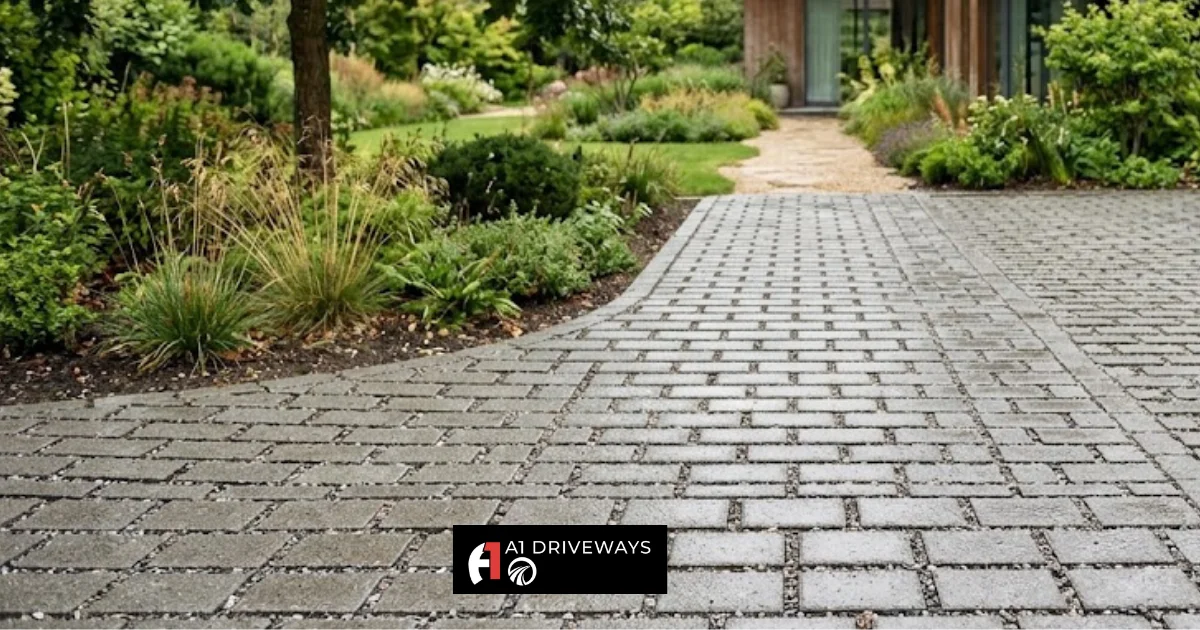
- Block paving: defines wheel tracks, bays and borders.
Inexpensive gravel driveway edging ideas
For inexpensive gravel driveway edging ideas, the best value is treated timber boards on pegs, simple concrete edging, reclaimed bricks or basic pressed steel. Steel costs more than timber, but it’s slim, strong and neat, so it’s our usual pick on a sensible budget. Whatever you choose, set it into the ground rather than sitting it on top, and haunch it in concrete where vehicles push against it.
Gravel driveway curbing ideas
Gravel driveway curbing ideas worth considering are bedded and haunched concrete kerbs, granite setts on edge, brick on edge, or a raised timber sleeper edge to hold deeper gravel on a slope. A flat mowing strip of bricks just below lawn level means you’ll never trim the edge by hand again. If you use raised kerbs, leave small drainage gaps so rainwater doesn’t get trapped.
Gravel path edging ideas
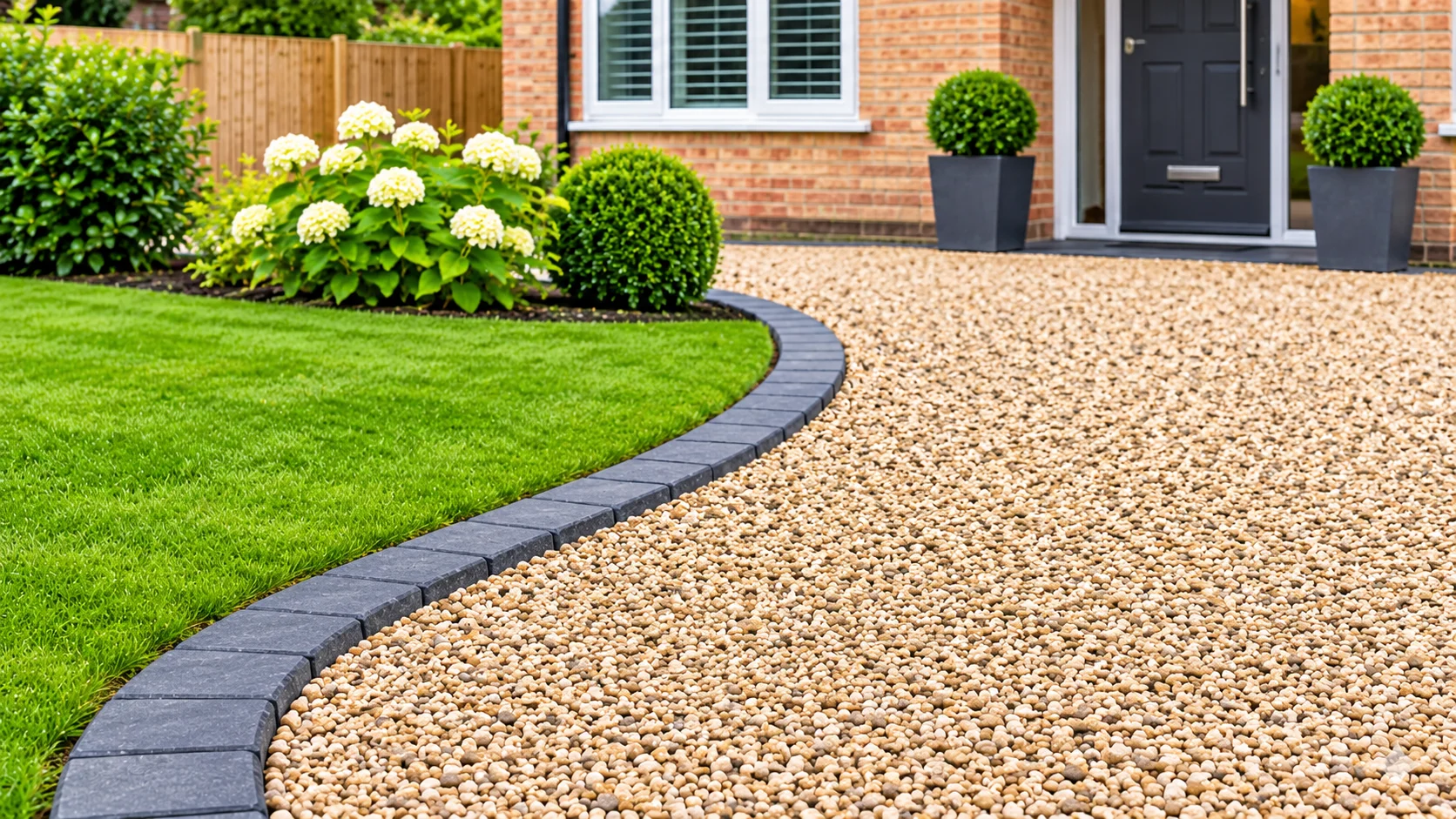
Paths are lighter-use and more forgiving. For gravel path edging ideas, try slim steel strips, brick on edge, stone setts or low timber boards. Keep the edge just above the gravel so stone stays put but water can still drain. Aim for 900mm to 1m wide if prams or wheelchairs will use it.
Gravel border ideas and gravel edge ideas
These gravel border ideas tie the drive into the garden: a gravel-mulch strip with grasses or lavender, a band of cobbles between drive and lawn, or a contrasting stripe where the drive meets the house. For a feature, these gravel edge ideas work well: brick soldier courses, a row of setts or a Corten steel strip that weathers to a rich rust.
Choosing the best gravel and building it properly
The best gravel for a driveway is usually angular crushed stone, 14 to 20mm, in granite, limestone or flint. Angular stones interlock under tyres, so they resist rutting. Rounded pea gravel rolls like ball bearings, so keep it for garden paths, and 10mm chippings are fine for paths but can stick in tyres on a drive.
Colour is personal. Grey suits most homes, golden suits brick and cottages, red or pink works with matching brickwork, and black shows dust and tyre marks.
A drive is only as good as what’s under it:
- Excavate roughly 150 to 200mm and remove soft ground.
- Fix the edging first, haunched where it takes vehicle load.
- Lay a permeable geotextile membrane.
- Add about 100mm of compacted MOT Type 1 sub-base, more on soft ground.
- Spread about 50mm of angular gravel and rake level.
- Set the falls so water drains away from the house and off the road, not onto it.
Gravel is permeable, but levels still matter. On clay or poorly draining sites a soakaway may be needed. To stop stone spreading, use strong edging, angular stone, the right depth, a well-compacted base and grids on slopes and turning areas, then give it a quick rake after heavy use.
Planning permission and maintenance
Gravel is permeable, so it normally falls within permitted development. Listed buildings, conservation areas and dropped kerbs are the exceptions that need permission. Upkeep takes an hour or two a season: rake stone back into tyre ruts, check edges after heavy rain or frost, pull weeds while they’re small, clear leaves, and top up thin patches once a year.
Why West Yorkshire homeowners choose A1 Driveways
We’ve been installing driveways across Bradford, Leeds, Wakefield, Huddersfield, Halifax and Dewsbury since 2013, so we know what Yorkshire rain, frost and clay soil do to a gravel drive. We’re insured, we give written workmanship guarantees, and we quote clearly with no hidden extras. Have a look at our gravel driveway service and gallery.
Thinking about a gravel driveway? Call 01274 028102 or request a free, no-obligation quote. We’ll visit, measure up and give you a straight answer.
Frequently Asked Questions
Are gravel driveways a good idea?
For most homes, yes. Gravel is affordable, drains freely and is easy to repair, and with solid edging and a compacted base it lasts for years. The main drawbacks are loose stone and regular raking, so it suits level or gently sloping drives best.
Is a gravel driveway a good idea for my house?
It usually is if your drive is fairly flat, you’re happy to rake occasionally and nobody needs a smooth, step-free surface. If your drive is steep or accessibility matters, gravel grids can help. A site visit settles it quickly.
What is the best edging for a gravel driveway?
Pressed steel for a modern look, brick for a traditional one, treated timber for a low-cost option and concrete kerbs for heavy use.
What is the best gravel for a driveway?
14 to 20mm angular crushed stone on a compacted MOT Type 1 sub-base. It locks together and resists rutting.
How deep should a gravel driveway be?
About 150 to 200mm in total: roughly 100mm of compacted sub-base plus about 50mm of gravel, with more on soft ground.
How do I stop weeds growing through gravel?
Use a permeable geotextile membrane over a compacted sub-base, keep soil and leaves out of the stone, and pull weeds early.
Do I need planning permission for a gravel driveway?
Usually not, because gravel is permeable. You may need permission for a listed building, a conservation area or a dropped kerb.